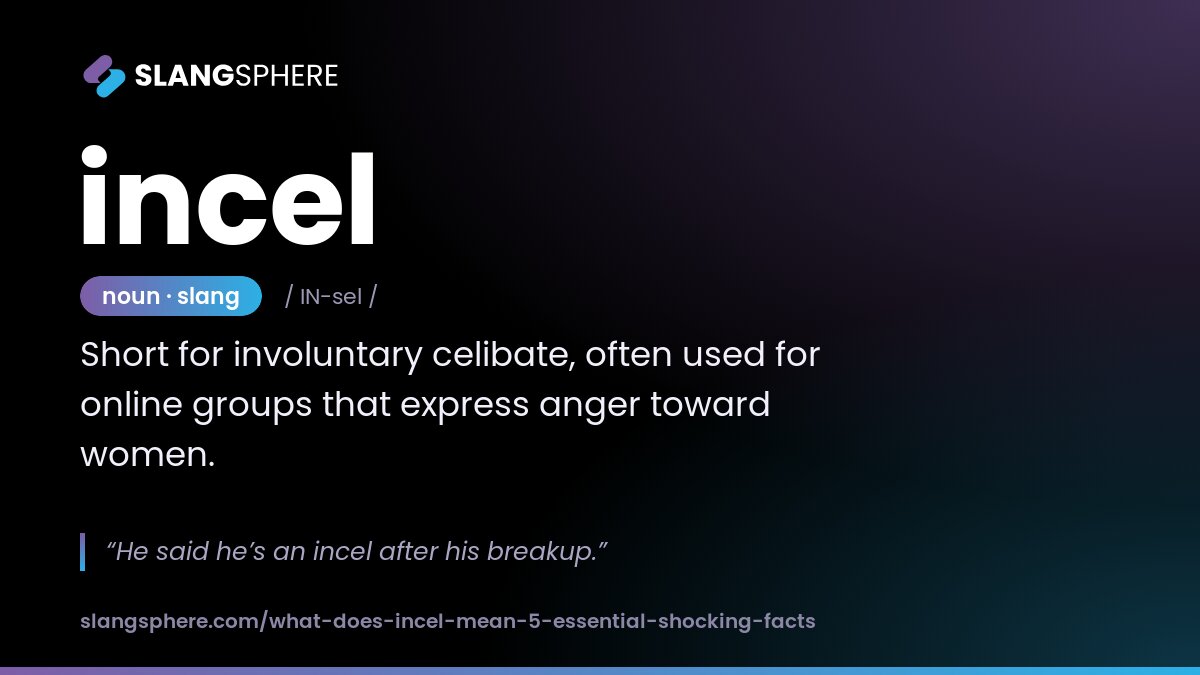
Incel is short for involuntary celibate, a label people use for someone who says they cannot find romantic or sexual partners despite wanting one. The word began as a neutral self-description but today also names online communities that often promote misogynistic ideas and, in some cases, celebrate violence.
What it means
Main meaning: someone who identifies as involuntarily celibate, meaning they want a partner or sex but cannot find one. Secondary meaning: an online identity and subculture, mostly male, that combines resentment about dating with a distinct slang and worldview.
The personal-status sense is still used by some as a sad dating confession. The subcultural sense is what shows up in news reports: forums and channels where members complain about attractiveness hierarchies, use dehumanizing labels for women, and sometimes endorse extreme rhetoric.
Where it comes from
The term traces back to an online project in the 1990s started by a Canadian woman who called her site the Involuntary Celibacy Project. Sources disagree on the exact year and details, but historians and scholars agree the label moved from a small, nonviolent support context into male-dominated forums in the 2000s and 2010s. For background see the overview on Wikipedia and dictionary entries like Oxford Learner’s.
How people use it
- “I’m kind of an incel, I just never meet anyone I click with.”, personal confession, nonpolitical use.
- “That subreddit is full of incel rhetoric, stay away.”, label for communities with hostile views toward women.
- “He calls himself an incel and posts about ‘Chads’ and ‘Stacys.'”, describing someone using specific incel slang.
- “Stop being an incel, get therapy.”, insult mixing behavioral critique and stigma.
- “She made a joke about incels, and it blew up on TikTok.”, memeified usage, often ironic or mocking.
Each example shows a different register: literal, community label, slang-aware description, insult, and ironic meme use.
Tone and when not to use it
The term is often pejorative and can be dangerous to toss around casually. It is fine to describe the subculture in reporting or safety conversations, but avoid using it as a punchline about a real person’s dating life. In workplaces and schools it is not appropriate, because it can stigmatize mental health struggles and also reference violent, misogynistic communities.
If you are discussing someone’s loneliness, use neutral language and offer support. If you are describing online extremism or harassment, use the term with clear context and evidence.
Similar terms
chad, stacy, femcel, redpill, blackpill
FAQ
What does incel mean on TikTok? On TikTok the label appears in memes, critiques, and short explainer videos. Sometimes creators mock incel tropes, other times they warn viewers about harmful forums.
Is calling someone an incel rude? Yes, often. Using the term as an insult can shame someone and ignores underlying issues like loneliness or mental health, while also referencing groups that promote hate.
Are all incels violent? No. Many people who describe themselves as involuntarily celibate are not violent. However, some online communities linked to the term have promoted or glorified real-world attacks, which is why scholars and safety agencies treat parts of the subculture as a risk factor.
Can the term be reclaimed? Reclaiming is rare and complicated. Because the word is tied to misogynistic movements and high-profile violence, most attempts to neutralize it struggle against that baggage.
Related Slang
- blackpill
- chad
- femcel
- stacy