

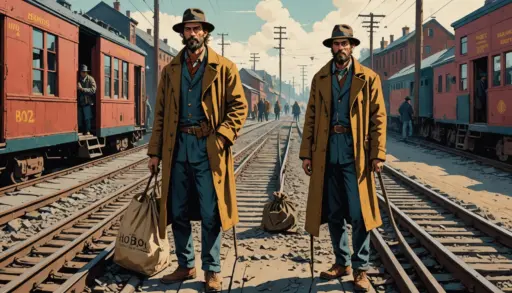
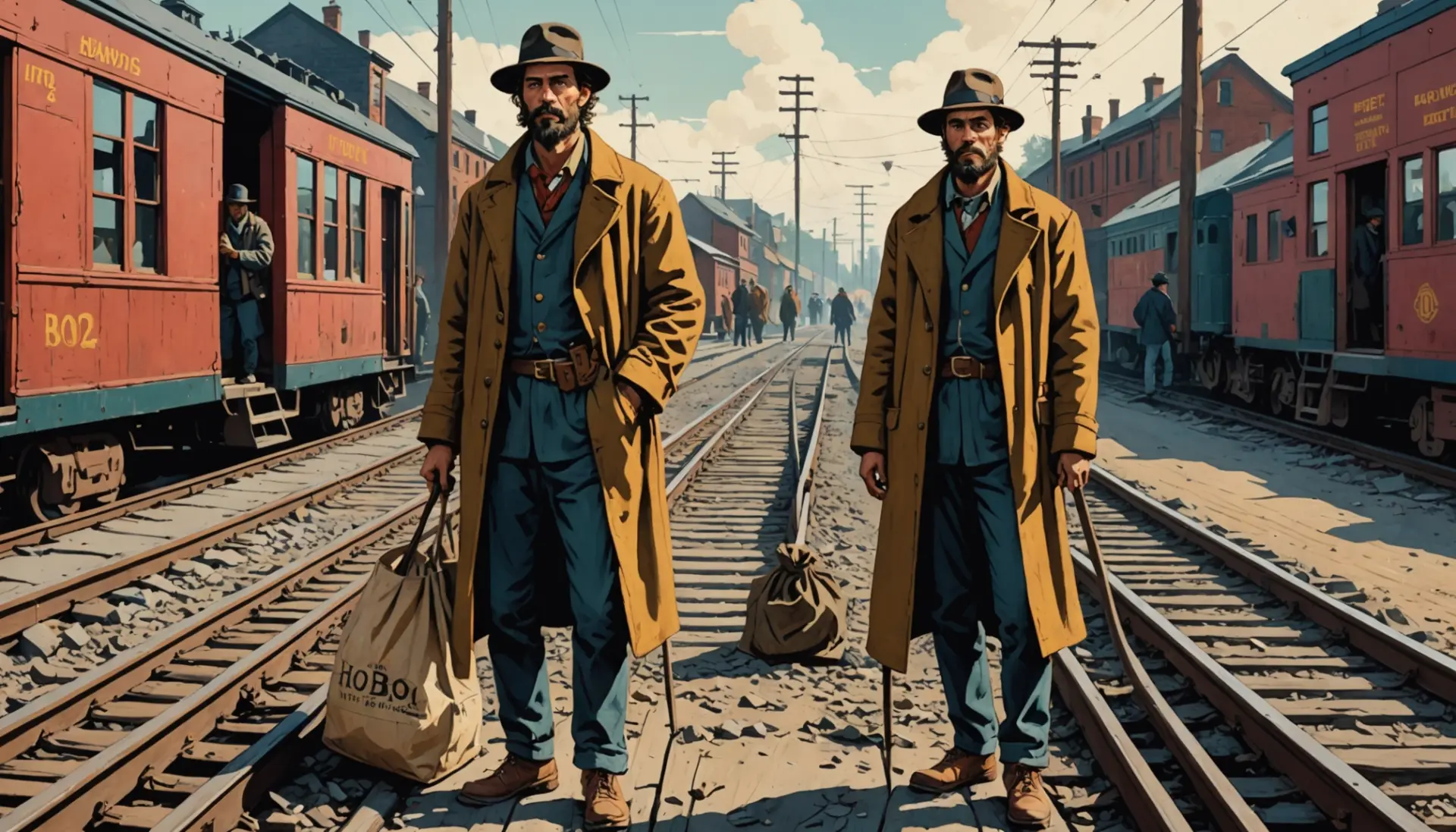

what does hobo mean is the first sentence most people type when they see the word in an old folk song, a gritty movie, or a viral tweet and wonder if it is an insult or a historical label. Honestly, the word carries more history than most slang terms, and it has been used in lots of ways over the last 150 years.
Table of Contents
What Does Hobo Mean: Meaning and Definition
So, what does hobo mean in plain language? A hobo is traditionally an itinerant worker, someone who travels from place to place looking for odd jobs, often by hopping freight trains across long distances. This is different from someone who does not want to work, that distinction matters.
Dictionary definitions, like the one on Merriam-Webster, still give the basic idea: a migrant worker or vagabond, especially one who traveled by freight train in the United States. The image you probably picture, the bindle and the hat, comes from a specific American era.
What Does Hobo Mean: Origins and History
The etymology of the word is messy and kind of delightful. No single origin has universal agreement. Some scholars think it comes from the phrase “hoe-boy,” a farmhand who traveled for seasonal work, while others point to earlier slang in the late 19th century that simply labeled transient laborers.
There is a detailed historical overview on Wikipedia if you want the long timeline, starting from the post-Civil War era into the Great Depression. By the 1930s, hobos had developed a recognizable culture, with their own signs, codes, and songs, immortalized in folk music and the era’s reportage.
How Hobos Differ from Tramps and Bums
People often mix up hobo, tramp, and bum. They sound interchangeable, but they mean different things. A hobo works when they can, a tramp moves around but does not work often, and a bum avoids work and is more permanently idle.
That nuance is useful. If someone calls a character in a movie a hobo, they usually mean a traveling laborer or someone living by their wits on the road, not just a lazy person. Context matters, especially in older films and literature.
Hobo in Popular Culture and Slang
Want examples? Woody Guthrie, the folk singer, wrote songs about the hobo life, and photographers like Dorothea Lange documented transient communities during the Dust Bowl. Those cultural artifacts shaped how the word is used and romanticized it a bit.
Then there are modern uses. Sometimes people use “hobo” jokingly in threads to mean someone camping out at a festival, or as hyperbole when a friend shows up in a very messy outfit. It can be playful, or it can be a throwaway insult, depending on tone.
Examples: How People Use “Hobo” Today
Here are a few real-feeling conversational examples, the kind of lines you might read on social or hear IRL. First, a casual text between friends: “Dude, your dorm room looks like a hobo moved in, clean it up lol.” Harsh, but common.
Another example you might see in a festival thread: “We set up camp near the entrance, total hobo vibes but honestly it was the most fun.” That one is ironic and often self-applied. And here’s someone correcting usage: “He was a hobo back in the 30s, he rode the rails and worked when he could, don’t call him a bum.” That clarifies the word’s historical meaning.
“I thought ‘hobo’ just meant tramp, but my grandpa said he was a hobo during the Depression, he hunted work and rode the rails.”
These examples show how the term flips between literal, historical usage and casual, joking slang. People on Reddit, Twitter, and in comment sections mix them all the time.
Is Calling Someone a Hobo Offensive?
Short answer: it can be. Calling someone a hobo in a historical context, like describing a photo or a diary, is usually neutral. Calling a living person a hobo as an insult can sting, because it implies instability, poverty, or homelessness.
Language changes, and so does shame. If your aim is to be accurate and not hurtful, say “itinerant worker,” “homeless person,” or refer to specific circumstances. If you are talking about the folk archetype, be explicit about the romanticized versus the real life experience.
Further Reading and Sources
If you want more depth, check the historical overview on Wikipedia and the concise definition at Merriam-Webster. Smithsonian has a thoughtful piece tracing rail-riding culture and the hobo economy, which I recommend for context: Smithsonian: Riding the Rail.
Also, if you liked this rundown, you might enjoy related slang explainers on SlangSphere. Try reading our takes on tramp slang meaning or bum slang meaning for comparison. We also have a deep-dive on travel subcultures at gypsy slang meaning.
Final thought: when someone asks “what does hobo mean,” they are often looking for the simple definition, but the word carries a whole lived history. It is funny and messy and human. Use it carefully, and ask if you are ever unsure about the tone.