


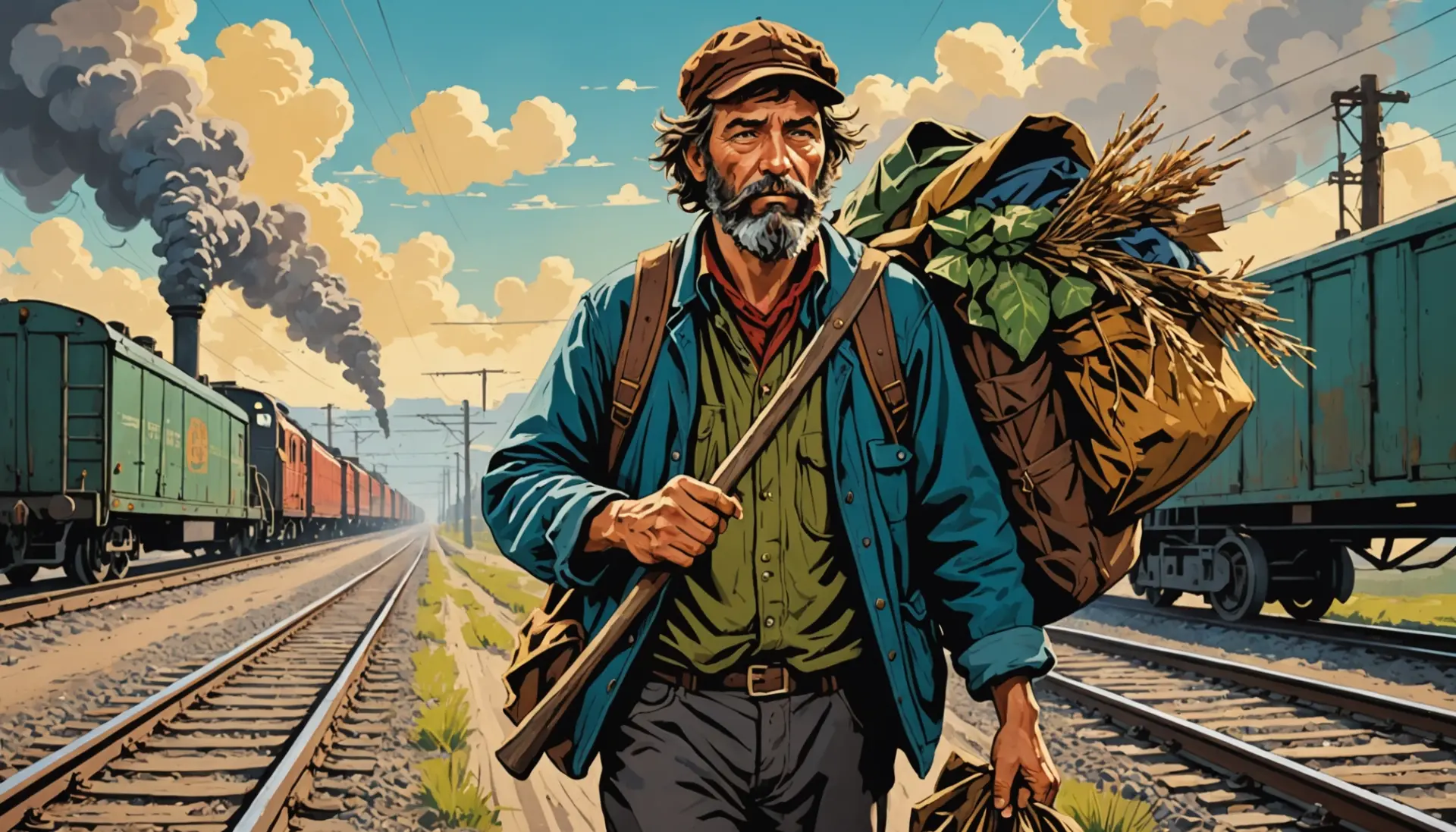

hobo slang meaning is simple on the surface, but the history and cultural weight behind the word are messier than most people expect.
Okay so, imagine a word that started as a label for itinerant workers and then got folded into Depression-era myth, folk songs, exploitation films, and a steady stream of casual insults. That is the life of the term “hobo.”
Table of Contents
Hobo Slang Meaning: A Clear Definition
When someone asks for the hobo slang meaning, they usually want the quick street-level definition: a hobo is an itinerant worker who travels, often by freight train, looking for short-term jobs.
That contrasts with similar words like “tramp” and “bum,” which people often mix up. A tramp travels but does not work, and a bum neither travels much nor works. Those distinctions matter historically, even if people forget them now.
Hobo Slang Meaning: Origins and Etymology
The story of the word is fuzzy. Linguists have floated a few theories, from “hoe-boy,” meaning a farmhand, to regional dialect mixes. My favorite is the practical and slightly goofy theory that hobo once came from people saying they were “homeward bound,” though that one is probably folk etymology.
If you want the scholarly take, check out the Wikipedia entry on hobo and the Merriam-Webster definition. Both give compact timelines and usages that show how the word moved from jargon to mainstream speech.
Hobo Culture, Codes, and Pop Culture
Hobo life had its own subculture: symbols scratched into fence posts to warn about dogs or point to safe places, and hobo jungles where people camped. That visual language got mythologized in songs by Woody Guthrie, and in photographs from the Dust Bowl era.
Pop culture kept the image alive, sometimes sympathetically, sometimes exploitatively. Think of the folk music revival, or movies like “Hobo with a Shotgun,” which riff off the archetype and turn it into something cinematic and extreme.
How People Use “Hobo” Today
So how does the hobo slang meaning land in modern chat? A few ways. Some people use it jokingly, like calling a friend who shows up in thrift-store layers a hobo in a loving, teasing way.
Other times it is outright pejorative, tossed at homeless people as shorthand for being disreputable or dirty. That usage flattens a complex socioeconomic situation into an insult, which is why some activists push back hard against casual use.
Real-Life Examples and Conversations
Examples help. Here are some real-feeling lines you might hear in different contexts.
“Dude, you look like a hobo this morning, did you spill coffee on your jacket?”
“I read a great piece on hobo signs in the archives. The graffiti was practical, not poetic.”
“Calling someone a hobo when they’re homeless is really not cool, ngl.”
Those show the three tones the term can take: teasing among friends, historical curiosity, and pointed stigma. The hobo slang meaning shifts with tone and intent, so context is everything.
Related Slang and Further Reading
If this topic hooked you, there are a few nearby terms and resources worth a look. For distinctions, see how “tramp” and “bum” are treated differently in usage guides and slang dictionaries.
Check out this authoritative historical overview at the Encyclopaedia Britannica for more depth. And for the slang dictionary angle, our site has pages that riff on related terms: tramp slang meaning, bum slang meaning, and a fun piece on symbols at hobo-code.
Quick Tips on Using the Word
If you care how your speech lands, here are a few low-effort guidelines. Use “hobo” when you mean the historical, itinerant-worker sense. Avoid it as a casual slur aimed at unhoused people.
Want to be more precise and less likely to offend? Say “itinerant worker,” “seasonal laborer,” or “person experiencing homelessness” depending on the context. Language matters, even with slang.
Final Thought
The hobo slang meaning is compact but loaded. It carries labor history, folk music, Depression-era trauma, and modern-day social judgment all at once.
So next time someone throws the word around, you can call the nuance. Or just quote Woody Guthrie and be poetic. Both are valid moves.
External sources: Wikipedia on Hobo, Merriam-Webster, Encyclopaedia Britannica.