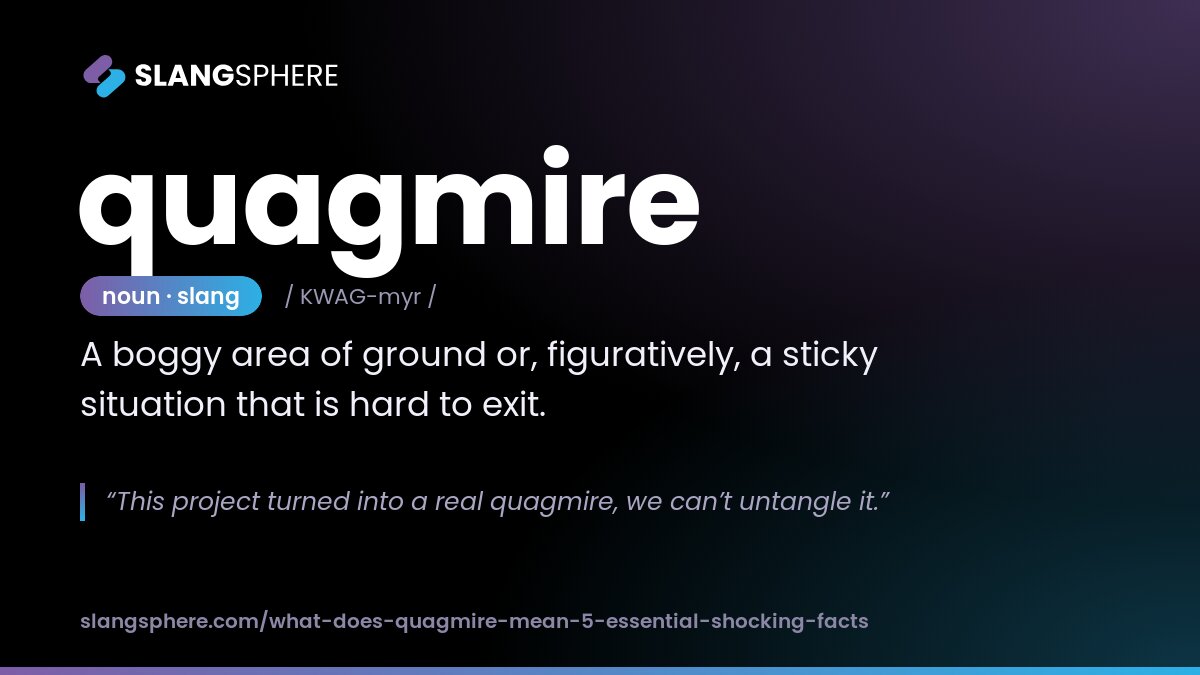
Quagmire is a noun that literally means a soft, boggy area of ground and figuratively means a sticky, hard-to-escape problem or situation. The word is used both for physical marshland and as a metaphor for messy, intractable problems, especially long, costly political or military entanglements. ([dictionary.cambridge.org](https://dictionary.cambridge.org/us/dictionary/english/quagmire?topic=difficult-situations-and-unpleasant-experiences&utm_source=openai))
What it means
Literal: a tract of soft, wet ground, marsh, or bog that may give way underfoot. People originally used it to describe actual muddy terrain. ([dictionary.cambridge.org](https://dictionary.cambridge.org/us/dictionary/english/quagmire?topic=difficult-situations-and-unpleasant-experiences&utm_source=openai))
Figurative: any situation that is messy, complicated, or difficult to get out of, often implying you will sink deeper the more you struggle. This sense covers personal drama, bureaucratic messes, and especially prolonged military or political entanglements. ([dictionary.com](https://www.dictionary.com/browse/quagmire?utm_source=openai))
Where it comes from
The word comes from quag plus mire, quag being an old word for a boggy place and mire meaning wet, sticky ground. The combined form appears in English by the late 16th century. The extended figurative sense is recorded from the 18th century and was widely used in American commentary on the Vietnam War after David Halberstam published The Making of a Quagmire in 1965. ([etymonline.com](https://www.etymonline.com/word/quagmire?utm_source=openai))
How people use it
-
“The committee turned a small fix into a quagmire of red tape.”
Casual workplace gripe pointing to bureaucratic complexity.
-
“We tried to help but the breakup became a quagmire of guilt and texts.”
Personal relationship drama described as emotionally sticky and prolonged.
-
“Nobody wants to talk about the campaign because it’s a quagmire now.”
Political commentators use it to signal a failing effort that is costly and hard to extract from.
-
“This migration script is a quagmire, every move creates two more bugs.”
Tech or project-speak for work that creates more problems as you try to fix it.
-
“Parking after the storm was a literal quagmire.”
Back to the literal, physical mud image used in descriptive writing or local news.
Tone and when not to use it
Quagmire is not offensive, but it reads formal or dramatic depending on context. It works well in journalism, analysis, or an annoyed group chat, but it can sound overwrought in casual small talk. Avoid using it to describe people as morally bad; it is best reserved for situations, systems, conflicts, or physical terrain.
Similar terms
morass, mess, pickle, bog, quagmire (literal), quicksand
FAQ
-
What does quagmire mean on social media?
On social platforms people use it the same way writers do: to call out a situation that is tangled, worsening, or hard to fix. It can be joking or serious depending on tone. ([dictionary.com](https://www.dictionary.com/browse/quagmire?utm_source=openai))
-
Is quagmire rude?
No, quagmire is not inherently rude. It is a descriptive word, though calling a situation a quagmire implies criticism of how it was handled.
-
Can you use quagmire to describe a person?
It is unusual to call a person a quagmire. That usage can come off as vague or insulting; stick to describing situations or behaviors instead.
-
Are there military or political connotations?
Yes, quagmire is often used for wars or interventions that become long, costly, and without clear exit paths, a usage popularized during the Vietnam era. ([civilresistance.info](https://civilresistance.info/biblio-item/2007/making-quagmire?utm_source=openai))
Sources: For the basic definition see Cambridge Dictionary, and for etymology see Online Etymology Dictionary. ([dictionary.cambridge.org](https://dictionary.cambridge.org/us/dictionary/english/quagmire?topic=difficult-situations-and-unpleasant-experiences&utm_source=openai))