


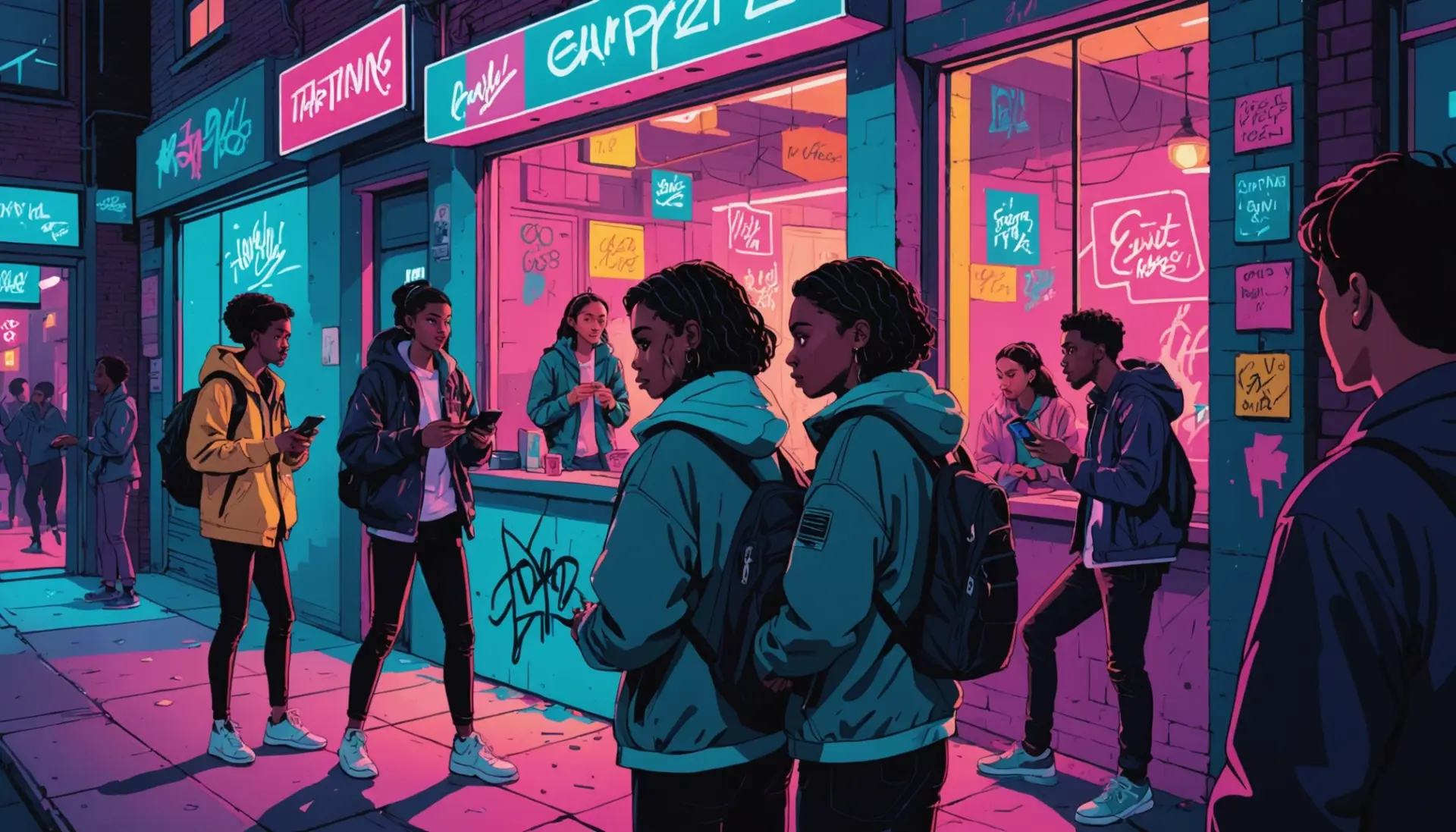

Sketch slang is what people mean when they call someone or something “off” in a low-key way, the kind of word you use when you want to avoid drama but still give a warning. Say it enough and it becomes shorthand for mistrust, weird vibes, or just plain unease. Honestly, it does a lot of heavy lifting in conversation without being loud about it.
Okay so, this piece breaks down where sketch slang came from, how people actually use it, and why it matters now that online spaces drip into real life. You know that TikTok where someone backs out of a deal and everyone calls it “sketchy”? Same vibe, just trimmed into everyday speech.
Table of Contents
What Does Sketch Slang Mean?
The core of sketch slang is suspicion. It labels people, places, or situations you would rather avoid. Not exactly criminal, more like unreliable, weird, or potentially problematic.
Think of it as shorthand for “I do not trust this” without the paperwork. It covers everything from a dodgy DM to a friend who keeps cancelling plans, all while sounding chill.
Sketch Slang Origins and Evolution
Originally, “sketchy” came from older usage meaning rough or incomplete, like a quick drawing. Over decades it shifted from literal sketches to describing people or places that felt unfinished or unsafe.
The modern, conversational form of sketch slang borrows from that older adjective but tightens it into a noun or verb usage. You’ll hear it in casual speech, group chats, and comment threads. Language morphs fast, especially when social media amplifies one phrase into a thousand micro-communities.
For a broader look at how words shift meaning over time, Wikipedia has good primer material, and Merriam-Webster tracks the historical senses of “sketchy” well on its entry for sketchy and sketch.
How People Use Sketch Slang Today
People use sketch slang to flag low-risk red flags and to gatekeep social spaces gently. Example: someone offers to sell concert tickets, but the messages are weird. “This is sketch,” you might say. It warns without accusing.
It also functions as social shorthand in dating and nightlife. After a bad date, you will see texts like: “He was so sketch lol”. Short, blunt, communal. It tells friends to be cautious without starting a moral crusade.
Online, the term mutates. On Reddit or TikTok a post gets labeled sketch slang when commenters smell clickbait or bait-and-switch. It is flexible. Use it to describe smells, vibes, transactions, or people. Ngl, it is versatile for micro-judgments.
Real Examples of Sketch Slang in Conversation
Here are real, everyday ways people actually use sketch slang. These are unedited, conversational takes you would hear over coffee or in a group chat.
Friend 1: “He said he works in finance but his profile pic is a dog filter. Sketch.”
Roommate: “The landlord texted at 2 a.m. asking to stop by. That’s sketch. Lock your doors.”
DM: “Selling Supreme box logo, hit me up.” Buyer: “Why no pay info? Sketch af.”
See the pattern? Sketch slang is casual, sometimes joking, sometimes serious. It signals caution, and often invites the listener to back off or to probe further.
Sketch Slang vs Similar Terms
Sketch slang sits near words like “sus,” “shady,” and “iffy,” but each has its own texture. “Sus” came out of gamer and meme culture and feels more playful. “Shady” hints at intentional wrongdoing. “Iffy” sounds softer and more uncertain. Sketch lands between them, ready to take on a range of minor red flags.
For context on related internet slang, check out Know Your Meme’s dives into how words like “sus” evolved online. It helps explain why sketch slang gained traction in decentralized, meme-driven spaces.
And if you want a formal dictionary take, Merriam-Webster and other lexicons can show older senses and definitions so you can trace the semantic shift that birthed modern sketch slang.
Is Saying Sketch Slang Offensive?
Usually no, but tone and target matter. Labeling someone as “sketch” because of their race, disability, or other protected traits is problematic and can be discriminatory. Calling out suspicious behavior is fine, attacking identity is not.
Use sketch slang responsibly. It should be a tool for personal safety and social signaling, not a way to dismiss people you simply do not like without cause.
How to Respond When Someone Calls Something Sketch Slang
If someone calls your action or a thing “sketch,” ask what specifically felt off. That turns vague suspicion into something actionable. You might discover a misunderstanding or a real issue that needs fixing.
And if the label is thrown around casually, you can defuse with humor. A light response keeps the convo from turning into a confrontation. People appreciate clarity more than drama.
Final Thoughts on Sketch Slang
Sketch slang is a compact, modern word for low-level mistrust. It tells friends to be careful, grades vibes, and lives in DMs and IRL conversations. It is not a formal accusation, but it does carry weight.
Language keeps changing. Some words fade, others get louder. For now, sketch slang fills a need for quick, polite danger signaling. Use it well.
Related reads: rizz slang meaning, sus slang meaning, and cap no cap.
For more depth on word histories and dictionary entries, see Merriam-Webster and Know Your Meme. Both help explain how casual talk becomes full-on slang.