


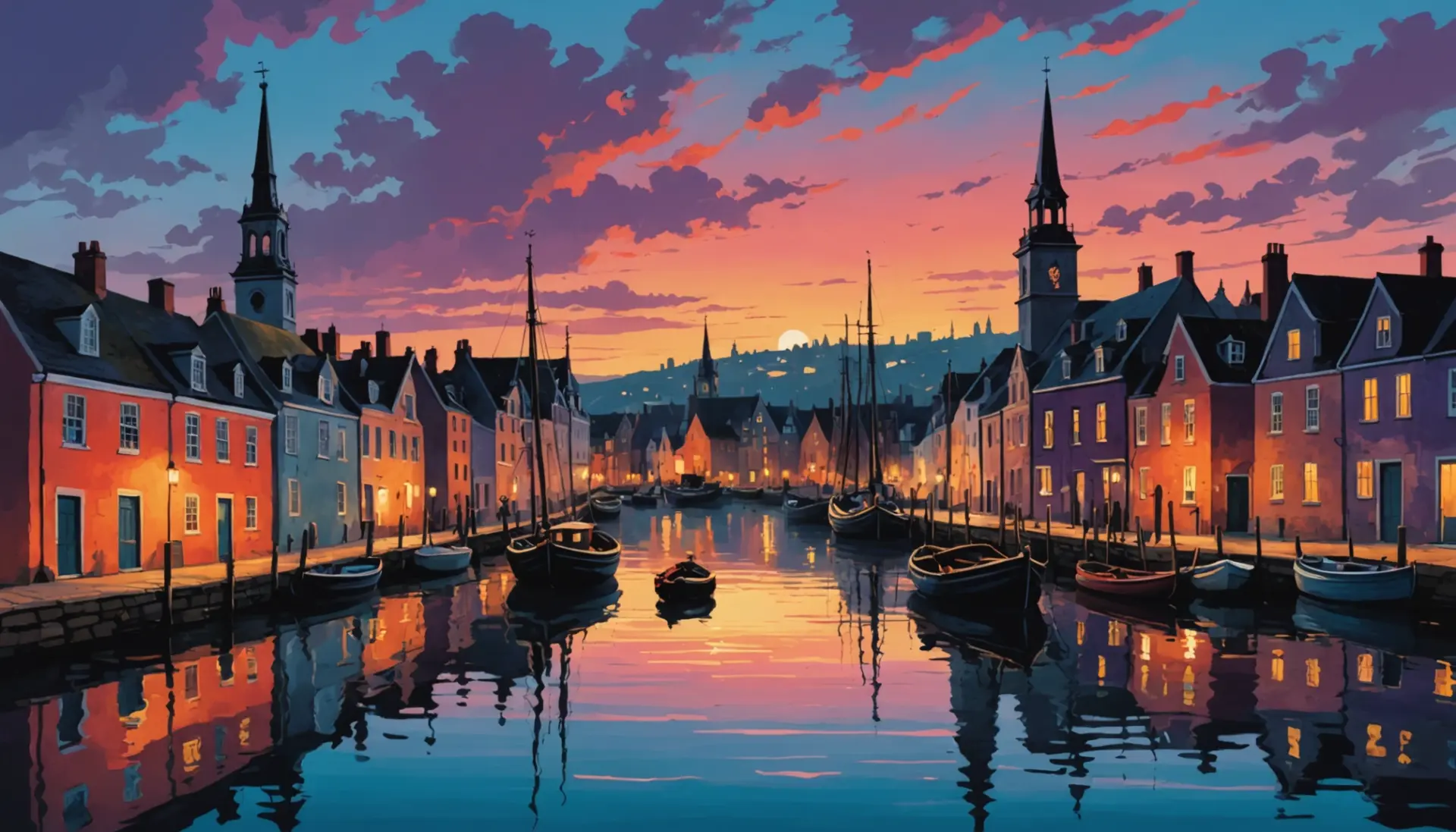

what does one if by land two if by sea mean, okay so first: yes, that exact phrase is the kind of historical line that shows up in schoolbooks, memes, and T-shirt slogans all at once.
It sounds like a secret code. And honestly, sometimes people treat it like one. But the real story is less cloak and dagger and more symbolic signal work from the Revolutionary era.
Table of Contents
what does one if by land two if by sea mean: origin and context
The phrase what does one if by land two if by sea mean refers to a lantern signal system used in 1775 to warn colonial militia about the route British troops would take to reach Lexington and Concord.
In plain terms, one lantern in the Old North Church window meant the redcoats were coming by land. Two lanterns meant they were coming by sea, meaning crossing the Charles River. It was a simple visual check that saved time and confusion on a foggy night.
If you want the canonical, nerdy deep read, check the Poetry Foundation page for Henry Wadsworth Longfellow’s poem Paul Revere’s Ride, which immortalized the line. And for the historical context, the Wikipedia entry on Paul Revere’s Ride is a solid starting point for primary details.
History and the Paul Revere myth
So where did the phrase become part of cultural memory? Largely because Longfellow made it singy and memorable in 1861, long after the actual event. His poem turned a practical signal into a patriotic, cinematic moment.
Longfellow’s line ratcheted up the drama. That helped the phrase travel into school recitations, plaques, and eventually, American shorthand for a clever early warning.
But the real event involved more than one rider and a network of lookouts. The Old North Church signal was one small node in a bigger communication web that colonial patriots used. The National Park Service and historical sites around Boston keep the fuller story if you want to dig in further.
what does one if by land two if by sea mean: modern uses, slang, and pop culture
Fast forward to now, and the phrase is doing interesting work. People use it literally when talking about the Paul Revere story, but it also gets repurposed as a neat metaphor for any binary signal or heads-up system.
On social media, it shows up in meme captions or in sarcastic tweets where someone says they need a signal about which drama route a friend is taking. You might also hear it used jokingly to mean “tell me which plan you’re taking,” like whether someone will show up in person or just DM you from a distance.
Because slang evolves, older historical phrases sometimes become trend-adjacent ears. Think of it like how movie quotes resurface as reaction gifs. The phrase gets remixed rather than respected as solemn history.
Where you might have heard it
It pops up in classroom lessons, Independence Day events, historical reenactments, and yes, on Instagram stories. Musicians and comedians sometimes reference it when making a binary joke about travel or approach.
Also, it occasionally appears in song lyrics or alt-histories of the Revolution, the kind of thing a true history nerd will love. If you like cultural crossovers, compare how the phrase traveled from history into mainstream, similar to how “rizz” jumped from niche usage to headline slang. For more slang reads, see rizz and delulu.
Real-life examples and how people say it today
Here are realistic, casual ways people might use the phrase in conversation, not as a school recitation but as shorthand or joke.
Friend A: “Are you coming to the rooftop or staying at the bar?”
Friend B: “One if by land, two if by sea. I might be late, check both.”
That one shows the phrase working as a playful binary signal. People also use it to elevate a plan: “We’ll signal one if by land, two if by sea” means we have a backup plan and a dramatic flair for execution.
Roommate: “How are we getting the couch upstairs?”
You: “One if by land, two if by sea. I mean, stairs or crane?”
Sometimes it appears in captions: “Taking the scenic route. One if by land, two if by sea.” That’s the kind of ironically historical flex people drop into travel posts.
If you want to sound sharp, you can twist it into modern shorthand like: “One-if-by-land vibes versus two-if-by-sea energy.” That’s mildly ridiculous, but it lands on TikTok as a mood caption more than a lecture.
And yes, history teachers will still use it in the literal sense, which is the origin story, not the meme version. For a balanced historical source, see the Old North Church history and related materials on Wikipedia.
Final takeaway
To summarize, the question what does one if by land two if by sea mean points to a literal lantern signal from the Revolutionary War era that Longfellow later poeticized. The phrase migrated from practical alert to symbolic shorthand for “which route are you taking.”
It works as historical shorthand, a pop-culture wink, and sometimes as tiny slang. Use it when you want to be witty about plans or give someone a tongue-in-cheek binary choice.
If you liked this unpacking, we’ve also covered slang that molds old phrases into new vibes, like bogart. And if you want a deeper slice of the primary source, read Longfellow’s poem at the Poetry Foundation and the contextual entries on Wikipedia linked above.
So next time someone asks “what does one if by land two if by sea mean,” you can give them the short answer, the historical angle, and a meme-ready example all in one. Tell them one lantern, or two. Either way, they’ll get the signal.