


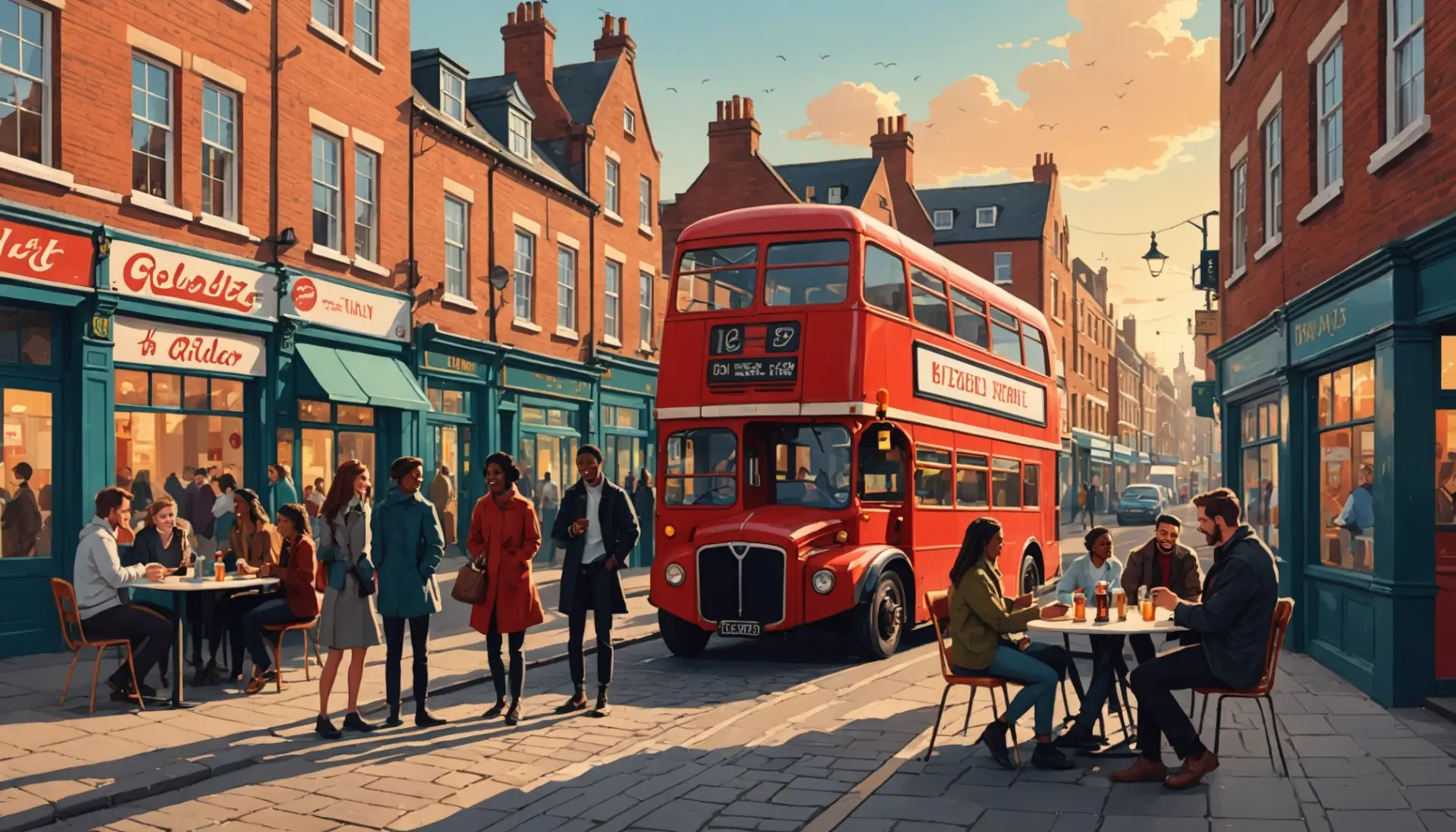

What Is England Slang?
England slang is the colorful, messy vocabulary people in England use that is not always taught in school, and it can tell you where someone is from, what music they listen to, and sometimes how old they are.
Think of it like regional seasoning. A Londoner might say “peng” and mean attractive, while someone from Newcastle will have completely different rhythms and words. Context matters more than dictionary definitions.
Table of Contents
Types of England Slang
There is not one single “England slang”. There are layers: Cockney rhyming slang in East London, Geordie in Newcastle, Scouse in Liverpool, and multiethnic urban slang shaped by Caribbean and West African diasporas, grime artists, and inner city youth culture.
Cockney rhyming slang, for example, gives us phrases like “apples and pears” for stairs and “dog and bone” for phone. For a quick primer see Cockney rhyming slang on Wikipedia. It is wild and very British.
History of England Slang
England slang has roots in class, migration, and music. The Industrial Revolution moved people around, and that collided dialects. Later, postwar immigration and the rise of grime and British hip hop brought new words into everyday use.
Public figures matter. When Stormzy spits a line, some words trickle into mainstream use. Likewise, TV shows and soaps like EastEnders and memes speed up adoption. Language is living, messy, and political.
How to Use England Slang Without Looking Awkward
Want to sound natural using england slang? First, listen. Watch interviews with Brits from the region you are copying, or follow British creators on TikTok. Mimic rhythm before words. It helps more than memorizing a glossary.
Start small. Use friendly words like “mate”, “cheers”, “ta”, or ask “you alright?” as a greeting. Avoid copying heavy regional accents or slurs that you do not understand. Tone and setting matter; a joke with mates is different from office chat.
Real-Life Examples of England Slang
Here are actual ways people use england slang in conversation, short and raw. These are things you will hear on the street, in pubs, and in DMs.
“Fancy a cheeky Nando’s later?”
That cheeky Nando’s line is a whole mood. It went viral as a meme and you can read about it on Know Your Meme. It means a casual, slightly indulgent meal out.
“I am knackered, mate. Been working all day.”
Knackered equals very tired. Another classic is “chuffed” which means pleased. People say “innit” as a tag question, even though it is not grammatically neat. These are part of everyday speech.
“He’s well peng, not gonna lie.”
Peng is modern slang for attractive or tasty. You will hear it in Gen Z slang and in grime circles. And then there are playful insults like “muppet” or warnings like “dodgy” to mean unreliable.
Famous Phrases and Memes
Some england slang terms blew up globally because of memes, TV, or songs. “Cheeky Nando’s” got meme treatment. Cockney phrases appeared in classic British films and helped define characters. The BBC and British pop culture have exported many words overseas.
If you want a fast lesson, look at how words travel. Social media sped up the spread of terms like “peng” and “mandem” and made them cross borders within weeks rather than decades. For a dictionary-level definition of slang itself see Merriam-Webster.
Regional favorites to know
London: mate, geezer, peng, mandem. Liverpool: la, boss, class. Newcastle: hinny, bobby dazzler, pet. These are broad strokes, and not everyone uses every word, but they give you taste and context.
Want to get nerdy? Cockney rhyming slang has fascinating examples and history. It’s playful and often intentionally opaque. Again, that is covered nicely on Wikipedia.
Why England Slang Matters
England slang tells stories about migration, class, and cultural exchange. It marks belonging. Saying “mate” or “sorry” differently can signal where you grew up or who you hang out with, honestly.
Language polices identity. Using someone else’s slang without respect can feel performative. But when you learn from friends, and use words in the right spaces, slang becomes a bridge, not a costume.
Further Reading and Related Slang
If you liked this, check other entries that break down single terms and trends, like rizz or the classic bogart. There is also a fun deep dive on the cheeky nandos phenomenon here cheeky nandos.
Language is ongoing. Listen, read, and when you borrow a word, use it kindly. England slang is living proof that words move with people, with music, and with laughter.