



Introduction
what does kwanzaa mean is the exact question a lot of people type into search bars every December, and honestly, it deserves a good, human answer. At its root, the phrase points to a Swahili origin, a modern tradition, and a set of values a lot of Black communities celebrate between December 26 and January 1.
Okay so this guide is not a lecture. Think of it as a chat over coffee where I clear up the origin story, explain the seven principles, flag the common misunderstandings, and show how people actually say it in real life. Nguzo Saba gets some airtime too.
Table of Contents
What Does Kwanzaa Mean? Origins and Literal Translation
So what does kwanzaa mean, literally? The term comes from the Swahili word kwanza, which means “first”. Karenga coined the holiday name from a phrase meaning “first fruits” in an attempt to root the celebration in African harvest traditions and shared community values.
Maulana Karenga created Kwanzaa in 1966 amid the Black Freedom movement, and he intentionally drew on Swahili because the language represented a pan-African cultural link for many activists then. If you want a quick reference, Wikipedia and Merriam-Webster have concise etymologies and background info.
What Does Kwanzaa Mean Culturally? The Seven Principles
Beyond literal translation, what does kwanzaa mean on a cultural level? It is organized around the Nguzo Saba, the seven principles: Umoja, Kujichagulia, Ujima, Ujamaa, Nia, Kuumba, and Imani. Each day focuses on one principle as a kind of moral and communal checkpoint.
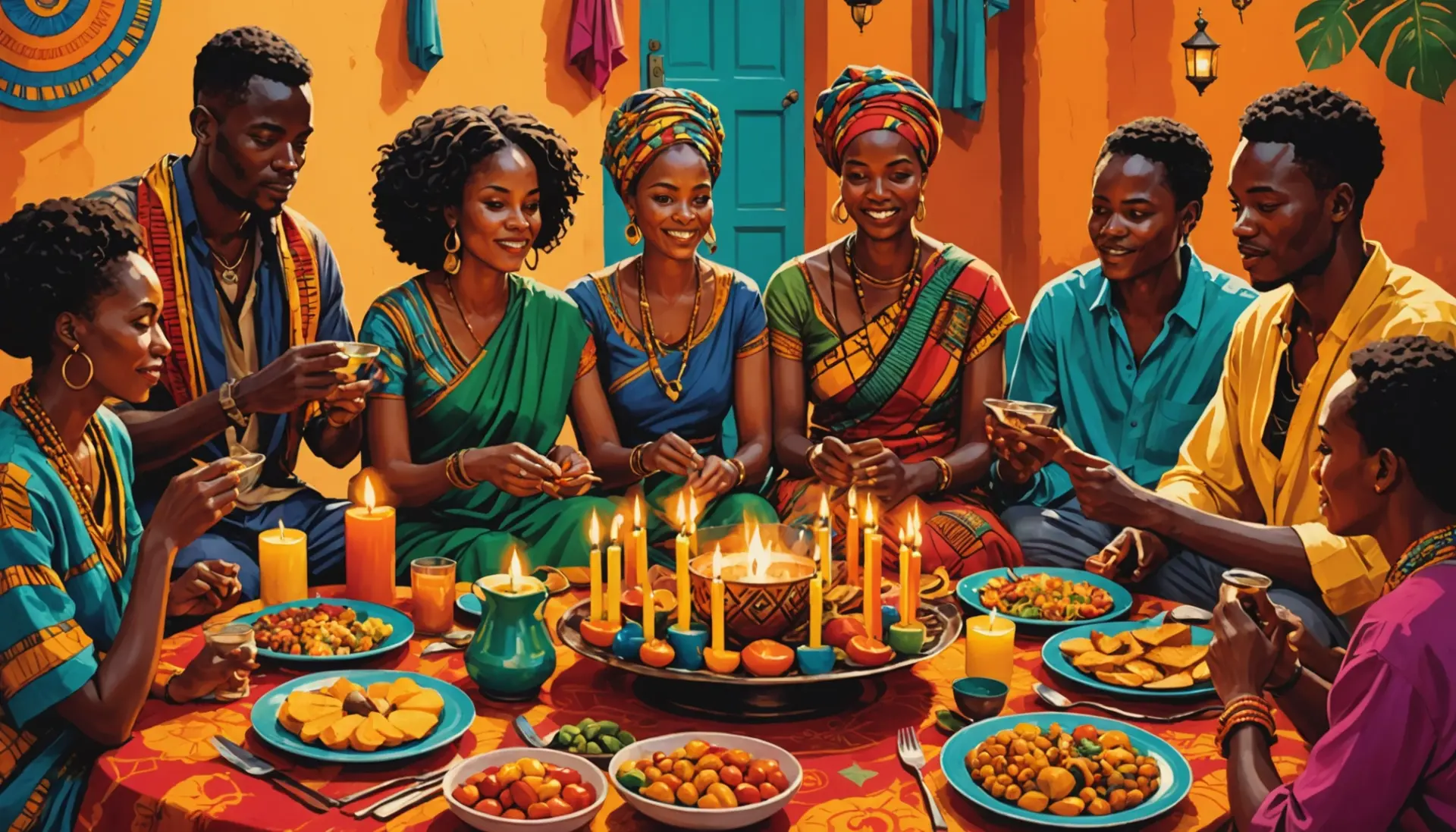
People light the kinara, reflect on the day’s principle, and often share food, music, and stories. The principles translate roughly to unity, self-determination, collective work and responsibility, cooperative economics, purpose, creativity, and faith. For a full rundown, the Nguzo Saba entry on Wikipedia is helpful.
Common Misconceptions About Kwanzaa
There are a few myths you hear all the time. Myth one: Kwanzaa is anti-Christian or an attempt to replace Christmas. Not true. Many people celebrate both, or observe Kwanzaa as a cultural, not religious, holiday. It’s inclusive in that sense.
Myth two: It’s “old” tradition from Africa. The holiday was formalized in the United States in 1966, so it’s a modern practice informed by African concepts. Karenga created it to strengthen community identity during a turbulent time.
How People Use Kwanzaa in Conversation
So how do people actually say it? Conversationally, you will hear straightforward greetings like “Happy Kwanzaa!” or “Happy Kwanzaa, we’re celebrating Umoja tonight.” But it also shows up in slang-adjacent talk as shorthand for cultural alignment or vibe.
Here are a few real-feel examples you might see in texts, DMs, or captions. They are stripped of usernames, but authentic in tone.
“We’re doing Kwanzaa at my aunt’s, focusing on Kujichagulia this year. You coming?”
“Happy Kwanzaa fam! Table full of collards and jollof, vibes on fifty.”
“Not tryna cancel Christmas, but Kwanzaa gives me community energy ngl.”
Those examples show how the holiday lives in speech: as celebration, as values, and as a mood. On social platforms, people will also use it as a tag to highlight Black-owned events, artisan markets, or educational workshops that center the principles.
Kwanzaa Today: Culture, Commerce, and Celebration
What does kwanzaa mean for people now? It’s a mix. For some it’s a week of family rituals and cultural affirmation. For others it’s activism-adjacent, a yearly reminder of solidarity and economic cooperation. And yes, commercialization has touched Kwanzaa just like it has other holidays.
Public figures and institutions often acknowledge Kwanzaa during the holidays. Presidents and mayors have sent greetings, museums host Kwanzaa events, and local community centers run educational programs. If you want a research-y source showing the timeline and how it became widely known, check out Britannica or the earlier cited Wikipedia page.
I should say: respect goes a long way. If you’re invited to a Kwanzaa event, show up curious and humble. Ask, listen, and honor the principles. People remember who shows up with respect versus those who treat it like a novelty.
Final Thoughts and How to Learn More
So again, if you typed “what does kwanzaa mean” into a search, now you have a fuller answer: it’s a Swahili-rooted name meaning “first fruits,” a set of seven communal principles, and a living tradition that started in the 1960s and evolved since. It sits at the intersection of culture, politics, and family practice.
Want to explore related cultural slang and how people sprinkle holiday language into modern slang? Check out our takes on rizz and woke to see how cultural words travel and change. If you’re reading this in December, happy holidays in whatever combination you celebrate.
Need sources? Here are a few quick links to authoritative pages: Kwanzaa on Wikipedia, Merriam-Webster’s entry, and Encyclopaedia Britannica’s overview. Read, ask, participate, and respect the history behind the phrase “what does kwanzaa mean” next time someone asks you in a group chat.