


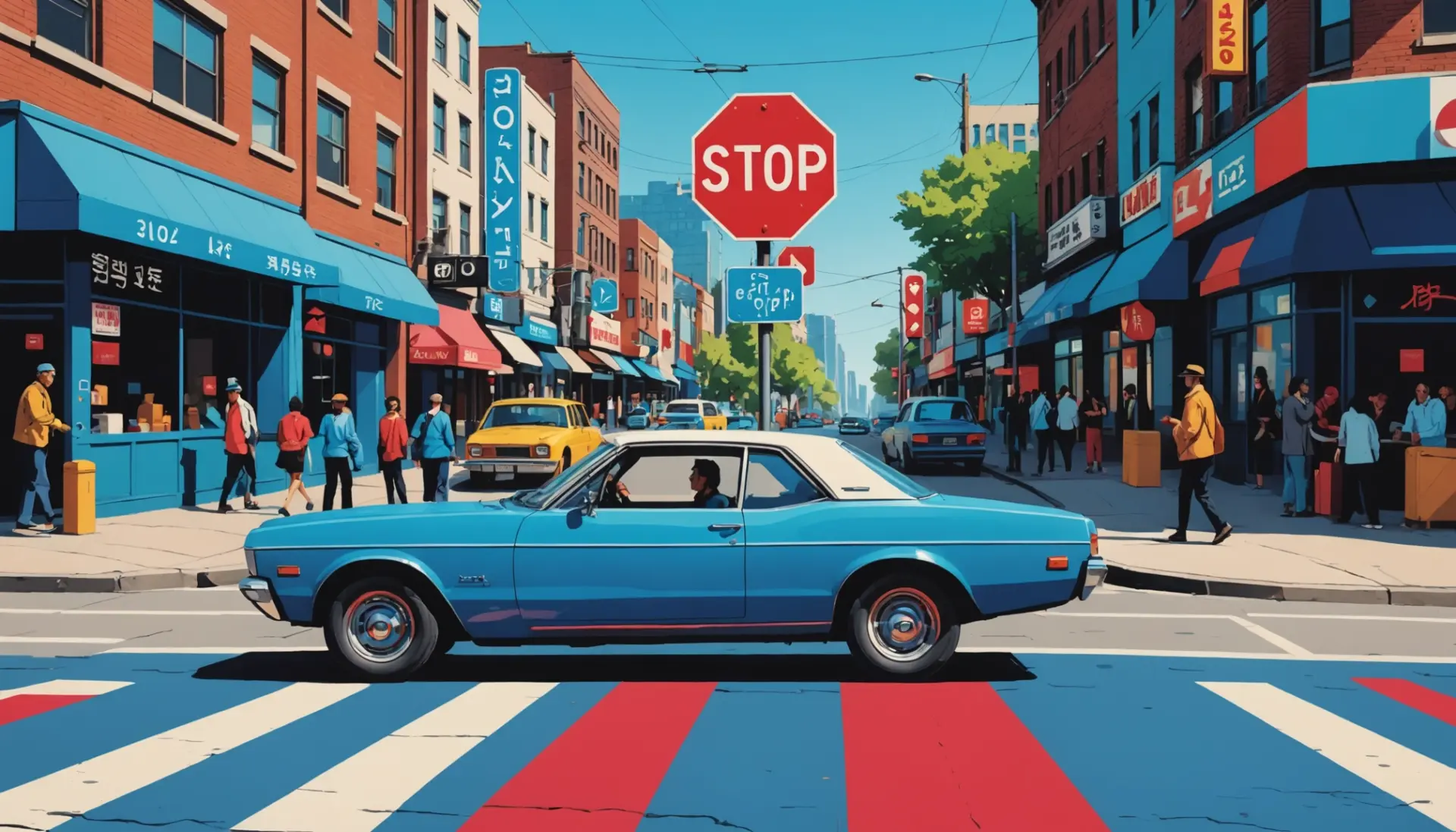

What Does a Blue Stop Sign Mean? Quick answer
what does a blue stop sign mean is something people type into search after spotting an odd sign or an old photo, and honestly, the answer is not one-size-fits-all.
Short version: a blue stop sign is usually not a modern international traffic control device, it is often historical, regional, or used for private/property purposes, and sometimes it shows up in pop culture or online slang contexts.
Table of Contents
What does a blue stop sign mean? The surprising history
If you saw a blue stop sign in a photo from the 1960s or a foreign country, you are not crazy, or colorblind, ngl.
Historically, color standards for traffic signs varied a lot. Some countries used a blue or green triangular sign to tell drivers to stop or yield long before the red octagon became global. Japan is the poster child for this shift.
Japan used a blue-ish stop sign for decades: a downward-pointing triangle with the Japanese word for stop in white. That blue look persisted until the country started switching to a red octagon to match international norms in recent years. For more on stop sign history, see Wikipedia: Stop sign and the page on Traffic signs in Japan.
What does a blue stop sign mean? Where you might see one
Blue stop signs pop up in three broad contexts: historic/regulatory, private or institutional property, and decorative or novelty use.
On private property like campuses, industrial parks, or gated communities, owners sometimes pick different colors to match branding or to avoid confusion with official public signs. That blue stop sign might mean the same thing as a red one, but it is not legally standardized.
You can also find blue or green stop signs in old photos, museums, or places that have not updated signage for decades. Sometimes a municipality keeps older signs for heritage reasons, and sometimes they are simply overdue for replacement.
Official rules and standards: is a blue stop sign legal?
Short answer: in most countries, official stop signs are red and octagonal and that is what law and manuals expect. A blue stop sign is rarely the legal standard on public roads.
In the United States the Manual on Uniform Traffic Control Devices sets color and shape standards for stop signs and other traffic controls. If a sign deviates from that, it can cause legal ambiguity. See the Federal Highway Administration MUTCD for details.
That said, on private roads local rules apply and drivers should obey whatever is posted for safety, even if the sign color is nonstandard.
Blue stop sign online, slang, and memes
Okay so not everything about blue stop signs is literal. People on social media sometimes use color-shifted emojis or images of blue stop signs as shorthand, aesthetics, or jokes.
For example, artists and meme accounts recolor a red stop sign to blue to match a feed palette, then use it to signify a softer, ironic stop: “stop, but vibe check first.” It is aesthetic, not official. The image becomes a visual gag more than traffic guidance.
Another angle: users might type “what does a blue stop sign mean” when they see a blue stop sign emoji variant in a platform skin, or when someone overlays a blue stop sign on a post to say “pause the receipts” or to meme someone into silence. Context matters, as always.
Real conversation examples
Here are realistic ways people use the phrase and the idea. These are actual-feeling snippets you could hear in a group chat or IRL.
“Yo, saw this blue stop sign outside my uni. What does a blue stop sign mean? Is this some campus redesign?”
“They used a blue stop sign in the ad. It was cute, but like, what does a blue stop sign mean in the copy? ‘Stop scrolling’ but make it moody.”
“Driving through an old neighborhood and passed a blue stop sign. I googled ‘what does a blue stop sign mean’ and learned it was probably just vintage Japanese-style or private property.”
See how the question is used both literally and sarcastically. People treat the blue color as a mood choice, a historical curiosity, or a branding decision.
Further reading, sources, and why it matters
If you want to nerd out on the rules behind signs and why color and shape matter for quick recognition, the MUTCD is essential reading. I linked it above. It is dense, but it explains why the red octagon won out globally.
For historical and country-specific quirks, the Wikipedia pages on stop signs and traffic signs in Japan are good primers. They helped me piece together the story of blue-ish Japanese stop signs and the international shift.
And if you want slang-adjacent content on modern shorthand and emojis, check some of our slang pages for tone and meme examples: rizz, delulu, and bogart.
Final take: concise, usable answer
If you need a quick rule: a blue stop sign usually does not mean anything different functionally from a red stop sign in informal or private contexts, but it is not the legal standard on public roads in most places.
If you see one on public streets, be cautious, follow the sign like any stop, and maybe snap a pic. If you are curious, search “what does a blue stop sign mean” for local history, or check municipal traffic rules.
Want more weird sign lore and slang vibes? Stick around the site; we cover visual culture and how it bleeds into speech.