


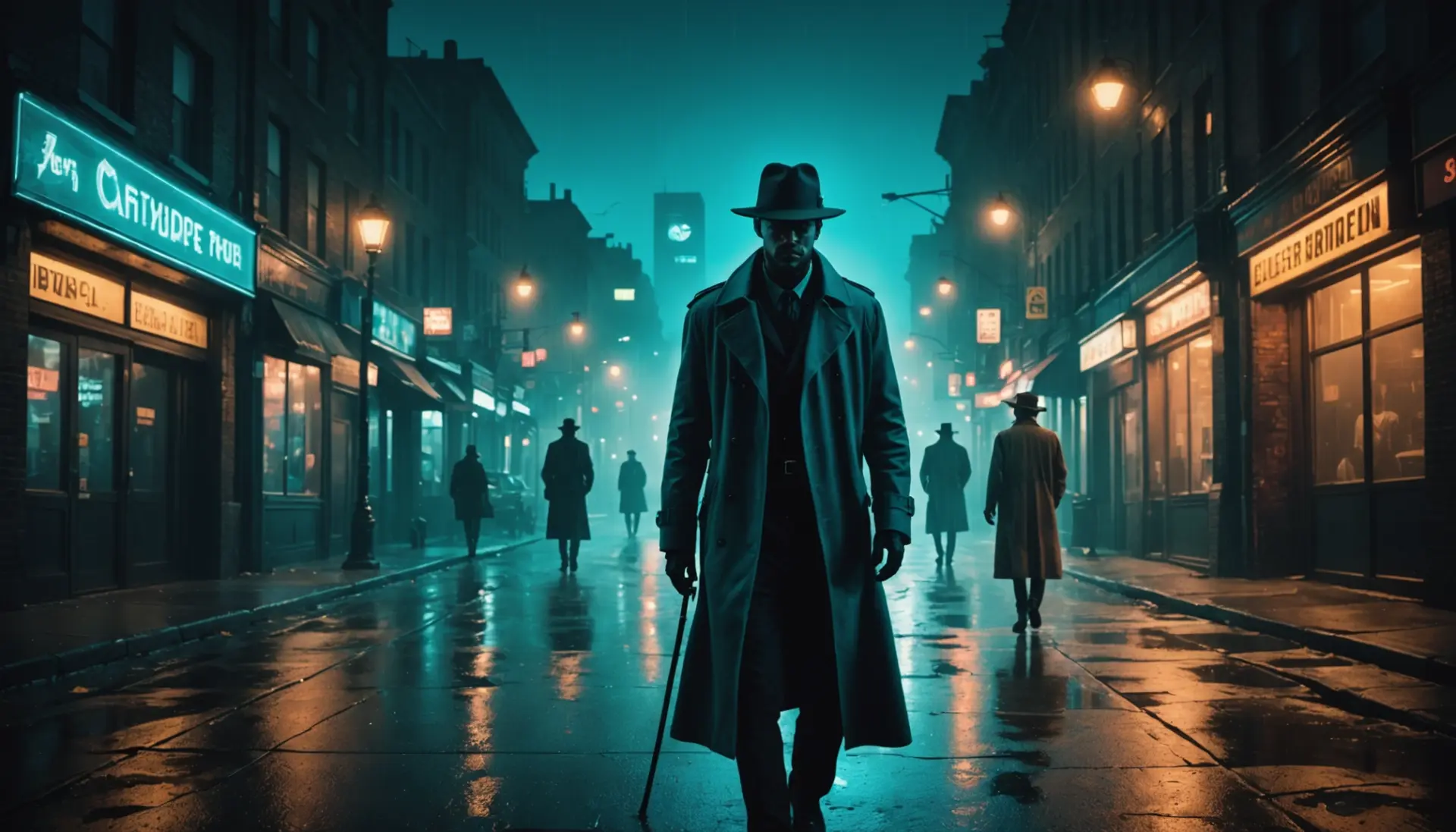

What does film noir mean, and why do people toss the term around like aesthetic seasoning?
Honestly, the phrase started as a cinephile label and went full mainstream, popping up on feeds, in fashion captions, and as shorthand for moody vibes. You might hear someone say “this alley is film noir” or “that playlist is giving film noir energy.” Confusing? Kinda. Useful? Also kinda.
Table of Contents
What Does Film Noir Mean: Origins
So what does film noir mean when you trace it back? The term comes from French critics in the mid-1940s who noticed a clutch of American movies that felt darker, morally ambiguous, and visually stark.
Those films, classics like Double Indemnity and The Maltese Falcon, leaned into shadowy lighting, cynical detectives, and plots where morality was messy. For a solid overview see Film noir on Wikipedia and the deeper historical context at Britannica.
What Does Film Noir Mean: Visual Style
At its core, asking what does film noir mean is asking about a set of visual and narrative habits: low-key lighting, dramatic contrasts, Venetian-blind shadows, and compositions that make the city look like a trap. Cinematographers like John Alton helped define that look.
These movies favored cigarette smoke, rain-slick streets, and frames that isolate characters. When people today say something looks film noir, they often mean it has that high-contrast, moody look, not necessarily that it shares noir’s fatalism.
Why People Use ‘Film Noir’ as Slang
Okay so why has a film-history term escaped into everyday speech? Language loves shortcuts. Film references are a fast way to communicate vibe.
Say you walk into a bar lit by one bulb and a saxophone is playing, and you call it “film noir”—everyone gets the map: moody, stylish, potentially dangerous. The phrase works like other aesthetic labels, think “vaporwave” or “cottagecore,” except film noir carries a specific palette and attitude.
Examples: How People Use “film noir” in Conversation
People toss the phrase into texts, tweets, and taglines. Here are real-sounding examples you would actually hear:
- “This photo is film noir, ngl the lighting is chef’s kiss.”
- “That alleyway looks film noir, perfect for a moody movie poster.”
- “We watched a double feature of film noir classics last night, total vibe check.”
- “His outfit is giving film noir detective, trench coat energy.”
These show the term doing double duty, describing both the literal genre and an aesthetic shorthand. People also hashtag it on Instagram to sell that mood.
Neo-Noir and Modern Spins
If you ask what does film noir mean in the 21st century, you have to add neo-noir to the answer. Films like Blade Runner and L.A. Confidential take noir DNA and remix it for new settings, themes, and tech.
Neo-noir shows how the phrase evolved from a strict film-history category into a flexible mood tag. Directors like David Fincher and Denis Villeneuve borrow noir’s chiaroscuro and cynicism, then layer in modern anxieties.
Further Reading and Sources
If you want to read a proper film-history take on what does film noir mean, start with authoritative sources and then watch a few staples. I like linking the serious stuff and the accessible stuff in the same breath.
Read this primer on Wikipedia: Film noir, then check a curated essay at Britannica. For visual examples, Criterion Collection essays and retrospectives are excellent.
References and extra links
For slang-adjacent context, you’ll find cultural writeups helpful. See how people use mood terms as shorthand across style communities. Also peep modern takeovers like film-noir filters on Instagram and TikTok trends that label songs or nights as “film noir vibe.”
Related SlangSphere pieces: Neo-Noir, Noir Aesthetic, and Vintage Vibes. They expand on how aesthetics become slang.
“What does film noir mean? It means mood, mystery, and a little bit of danger, with a cigarette and a raincoat. And yeah, it also looks great on a Polaroid.”
So, next time someone asks what does film noir mean, you can answer short and sweet: it names a classic film style and now also a shorthand for a moody, shadowy vibe. Use it to describe movies, nights out, photos, fashion, or playlists. But be ready to explain the old-school meaning if your friend studied film history and starts quoting James M. Cain.
Final note: calling things “film noir” can be playful and useful, but don’t flatten the originals. The classic films are about social anxiety, gender, and postwar disillusionment. When you say something is “film noir,” you are borrowing an entire sensibility, so use it with taste.