


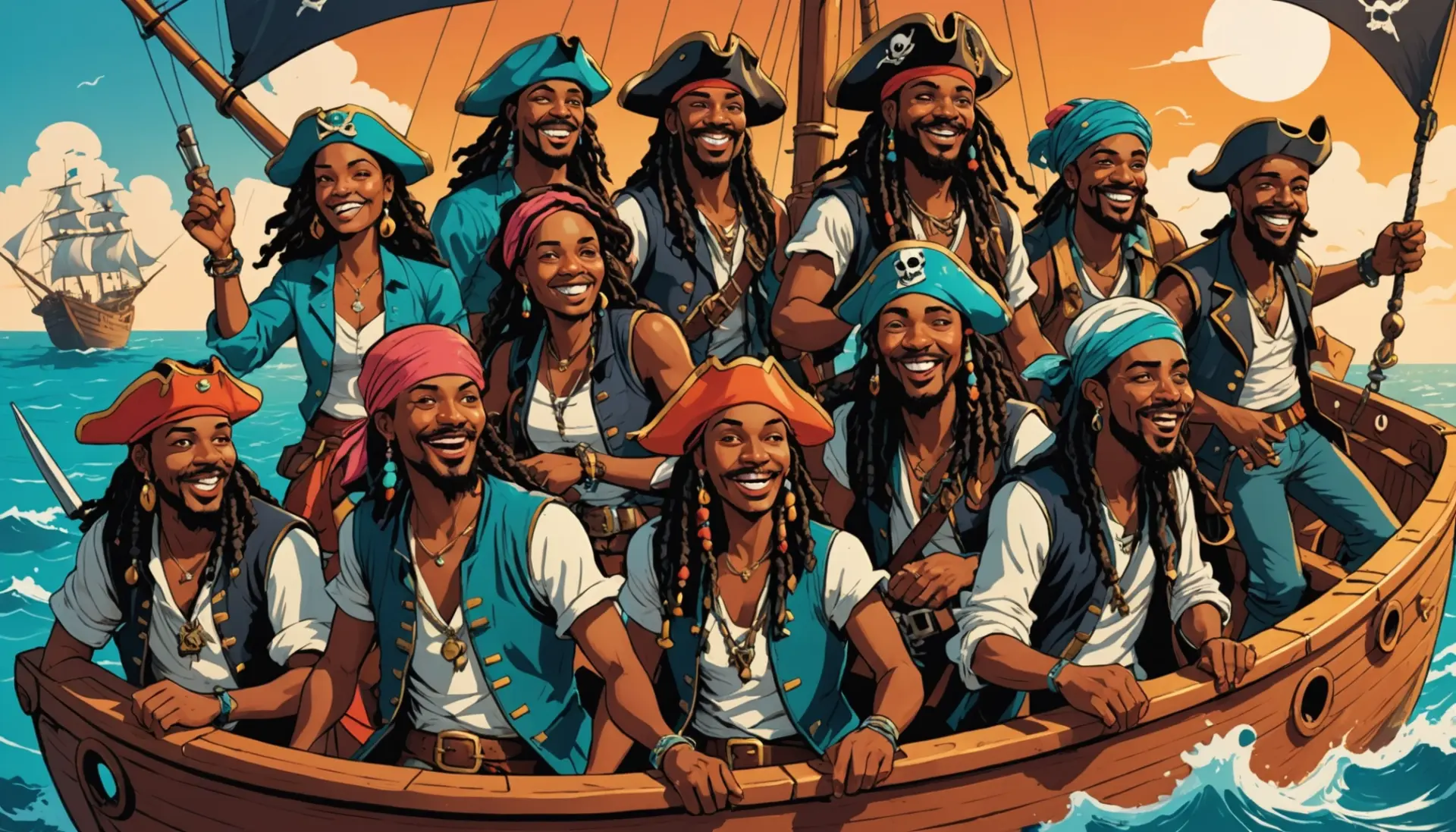

Intro: Why Pirate Slang Words Still Crack Us Up
Pirate slang words are the playful, salty phrases people use to sound like a swashbuckler or to jokily reference pirate culture. Honestly, they feel part costume, part linguistic stunt, and part pop-culture echo. From Treasure Island to Pirates of the Caribbean, these words keep popping up in songs, memes, and Halloween costumes. Talk Like a Pirate Day made it official: people adore talking like a cartoon buccaneer for fun.
Table of Contents
What Pirate Slang Words Mean
At their core, pirate slang words are a mix of real nautical terms, regional speech from the 17th and 18th centuries, and theatrical flourishes invented later. Some words, like “buccaneer” or “privateer,” were legal or social categories. Others, like “yo-ho-ho,” are pure showbiz, built to sound salty and fun.
If you read the entries on Wikipedia: Pirate you get the historical backbone. Then you layer on fiction and film. Robert Louis Stevenson, the golden age of Hollywood, and modern movies all spooned out the flavor that people now call pirate talk.
Common Pirate Slang Words and Examples
Some pirate slang words are obvious to most people, like “matey” for friend, or “landlubber” for someone who hates boats. Others are less obvious but show up in everyday English: “scallywag” and “bilge” made the leap from maritime insult to wider slang territory.
Here are real pirate-y words you might actually hear, with quick explanations and real usage examples.
- Aye — means yes. Example: “Aye, captain, I’ll trim the sail.” People still say it as a joke: “Aye, I will eat that pizza.”
- Avast — stop or pay attention. Example: “Avast, ye scurvy dogs!” Used ironically: “Avast! You forgot the chargers.”
- Matey — friend, buddy. Example: “How’s it going, matey?” College roommates say it when messing around: “Nice move, matey.”
- Scallywag — a rascal. Example: “You little scallywag, you ate the last cookie.” The word shows up in family-friendly roasts.
- Booty — treasure, stolen goods. Example: “We split the booty.” Modern slang twist: people use it jokingly for any haul, like concert merch booty.
- Swashbuckler — a flamboyant fighter or adventurer. Example: “He’s the swashbuckler of the team.” Often used for movie heroes and influencers with loud style.
- Bilge — garbage or nonsense. Example: “That’s bilge.” You will hear it used like “That news is bilge.”
- Jolly Roger — the pirate flag. Example: “They raised the Jolly Roger.” Pop culture loves the flag as an icon; see the film franchises that riff on it.
- Keelhaul — an old brutal punishment. Example: “They joked he’d be keelhauled if he missed rent.” It’s used hyperbolically now, thank goodness.
Conversation example: “Hey matey, avast that noise.” “Aye, it’s probably just the neighbor’s speaker.”
How Pirate Slang Words Live On Today
Why do pirate slang words stay in circulation? Part nostalgia, part brand power, part meme culture. Johnny Depp’s Jack Sparrow alone rewired what people imagine a pirate sounds like. After that, everything from parodies to TikTok audio samples kept the accent and lingo alive.
Memes also do heavy lifting. A phrase like “yo-ho-ho” turns into a caption for anything chaotic or playful. And then there is Talk Like a Pirate Day, which started in 1995 and still trends every September 19. If you want cultural receipts, check the origin on Talk Like a Pirate Day.
Language sites and dictionaries sometimes list these terms too. For basic definitions, resources like Merriam-Webster: buccaneer give the formal history while meme sites catalog the jokes.
Using Pirate Slang Words Right Now
If you want to toss in pirate slang words without sounding like a bad Halloween impression, keep it light and context-aware. Drop “aye” or “matey” in a text to be playful. Use “bilge” when calling out nonsense. And never use the terms in a way that mocks real cultures or reduces maritime history to caricature.
Here are a few modern conversational examples to copy from.
- Text to a friend: “Aye, we heading to the bar at eight?”
- Slack message: “That meeting was bilge, ngl.”
- Instagram caption: “Found some vintage booty at the flea market.”
Final Thoughts on Pirate Slang Words
Pirate slang words are less a set of grammar rules and more a cultural vibe. They let people play at being theatrical, rebellious, or just silly. You can trace many of these terms back to real maritime life, but most of what we use today is filtered through fiction and pop culture.
So the next time someone texts “Avast, matey,” laugh, roll your eyes, and maybe reply “Aye aye.” It’s harmless fun, and honestly, a little theatricality never hurt anyone. If you want to nerd out further, read historical accounts or the original novels that helped shape the myth, then binge Pirates of the Caribbean for the full cinematic accent, salty grins and all.
Want more slang breakdowns? Check out these takes on modern street slang at SlangSphere: rizz slang meaning, bogart slang meaning, and yo-ho-ho slang meaning.