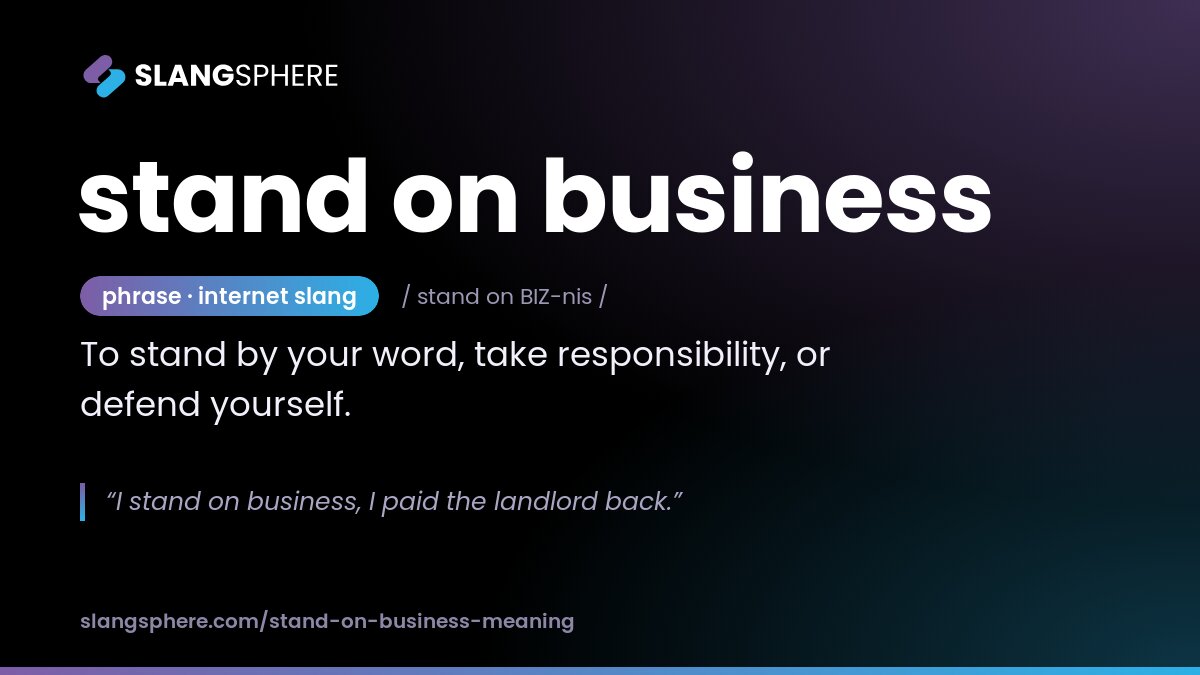
Stand on business means to stand by your word, take responsibility, or defend yourself when pushed. It’s an AAVE-rooted phrase used online to say someone backs up their claims with action or refuses to be disrespected.
What it means
Main meaning: reliably keeping your promises and following through on responsibilities, for example doing the work you said you would or enforcing a boundary.
Secondary meaning: asserting yourself or defending your reputation when challenged, roughly: not folding under pressure or taking disrespect personally.
Where it comes from
The phrase appears in African American Vernacular English and was circulating online for years before becoming more widespread. Internet writeups trace early online uses back to the 2010s, and the expression surged in visibility after spots in popular media and viral sketches. For reporting on the recent spike in attention see Know Your Meme and a coverage piece noting the phrase’s pop culture spread via music and comedy (Yahoo). The exact origin in speech is unclear.
How people use it
-
“I stand on business, you can ask my team.”, Claiming you and your crew do what you say.
-
“She stood on her word and owned the project.”, Complimenting reliable follow-through.
-
“Don’t disrespect him, he’ll stand on business.”, Warning someone will defend their reputation.
-
“If you say you paid, stand on it and show the receipt.”, Calling for proof of a claim.
Tone and when not to use it
The phrase is informal, culturally loaded, and best kept out of professional or formal settings. It is not overtly profane, but it is rooted in AAVE, so use it respectfully and avoid shoehorning it into corporate messaging. Don’t use it to escalate conflict; saying it can read confrontational.
Similar terms
want the smoke, keep it 100, no cap, stand your ground, hold you to it
FAQ
What does this mean on TikTok? On TikTok it usually tags videos where someone shows proof they followed through, or where creators call out people who talk big but do nothing. It functions as a credibility flex.
Is it rude? Not inherently, but it can sound confrontational. Tone and context matter: used as praise it is positive, used as a challenge it can provoke conflict.
Can anyone use it? People use it widely online, but remember the phrase comes from AAVE; using it casually in formal advertising or to mock the culture can be disrespectful.