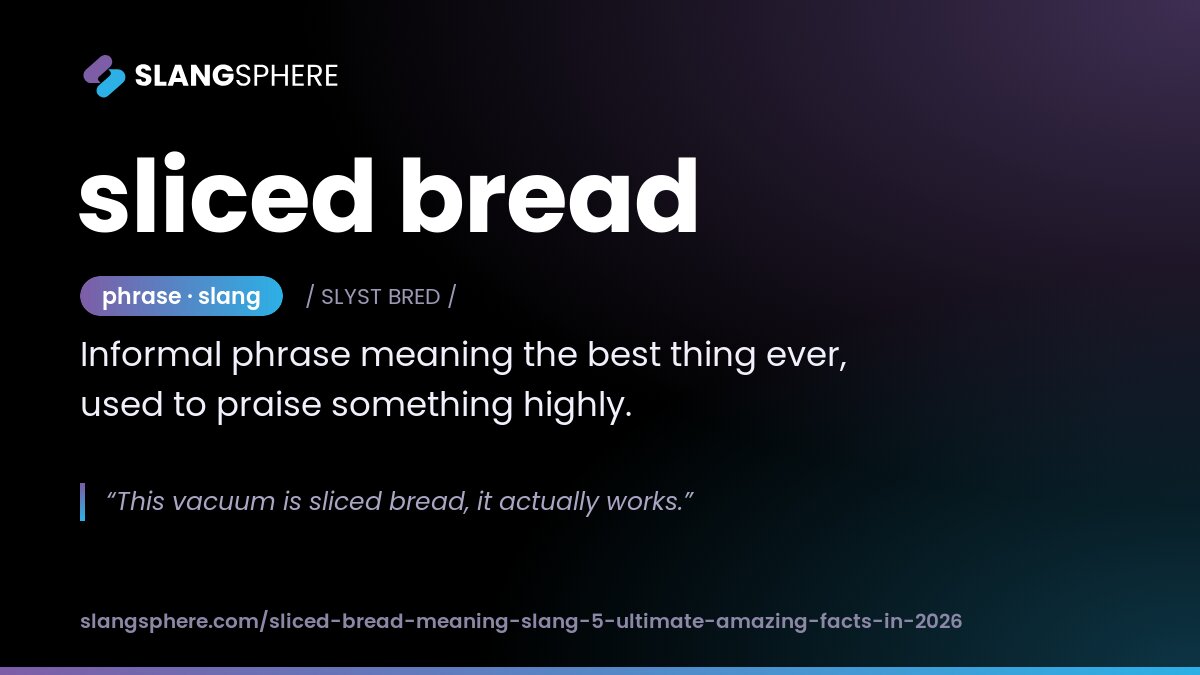
Sliced bread means the best thing ever, a quick way to call something extremely useful, impressive, or top tier. The line is usually playful and can be sincere or sarcastic depending on tone. It grew out of early 20th century consumer hype around pre-sliced loaves and stuck as a standard idiom.
What it means
Main meaning: a compliment that labels a thing or person as unusually excellent, usually for practical usefulness or convenience. Secondary meaning: a joking or sarcastic label when someone wants to mock overpraise.
Where it comes from
The literal innovation is credited to early commercial bread-slicing machines in the 1920s, which advertisers treated as a striking convenience. That marketing language evolved into the idiom that compares any impressive new thing to that convenience. For background see the Wikipedia entry and the Cambridge Dictionary.
How people use it
- Text: “New noise-cancelling earbuds? Sliced bread.”, short boast, calling the product a must-have.
- Tweet: “This small batch cold brew is sliced bread. 10/10”, casual praise in a single-line post.
- Instagram caption: “Finally found a jacket that fits right, sliced bread vibes.”, compliment with a wink, fits lifestyle posts.
- Comment on a review: “Not sure if it is sliced bread but it is solid value.”, hedged praise, mild skepticism.
- Group chat: “Bro, your pasta sauce is sliced bread.”, playful, nonliteral admiration for cooking or skill.
Tone and when not to use it
The phrase is informal and conversational, good for social posts, texts, and casual speech. It works when you want a lighthearted superlative. Avoid it in formal writing, technical documentation, or sensitive contexts where sarcasm could be misread. It is not offensive, but older speakers may expect the full idiom “the best thing since sliced bread” and younger audiences might use edgier shorthand like GOAT instead.
Similar terms
greatest thing since, best thing since, GOAT, peak, chefs kiss
FAQ
What does it mean on TikTok or in memes? On short-form platforms it is a fast way to hype something, usually paired with a reaction clip or quick demo. Tone tells you if it is sincere or ironic.
Is it rude or offensive? No, it is a harmless compliment. It can be sarcastic but that is about attitude, not obscenity.
Where did the phrase originally come from? It traces to early 20th century marketing for pre-sliced loaves and the novelty of the appliance that sliced them. Over decades that advertising wording hardened into the familiar idiom.
Can I use it at work? Use it sparingly. It is fine in casual team chat or a lighthearted shout-out, but avoid in formal client emails or executive reports.