


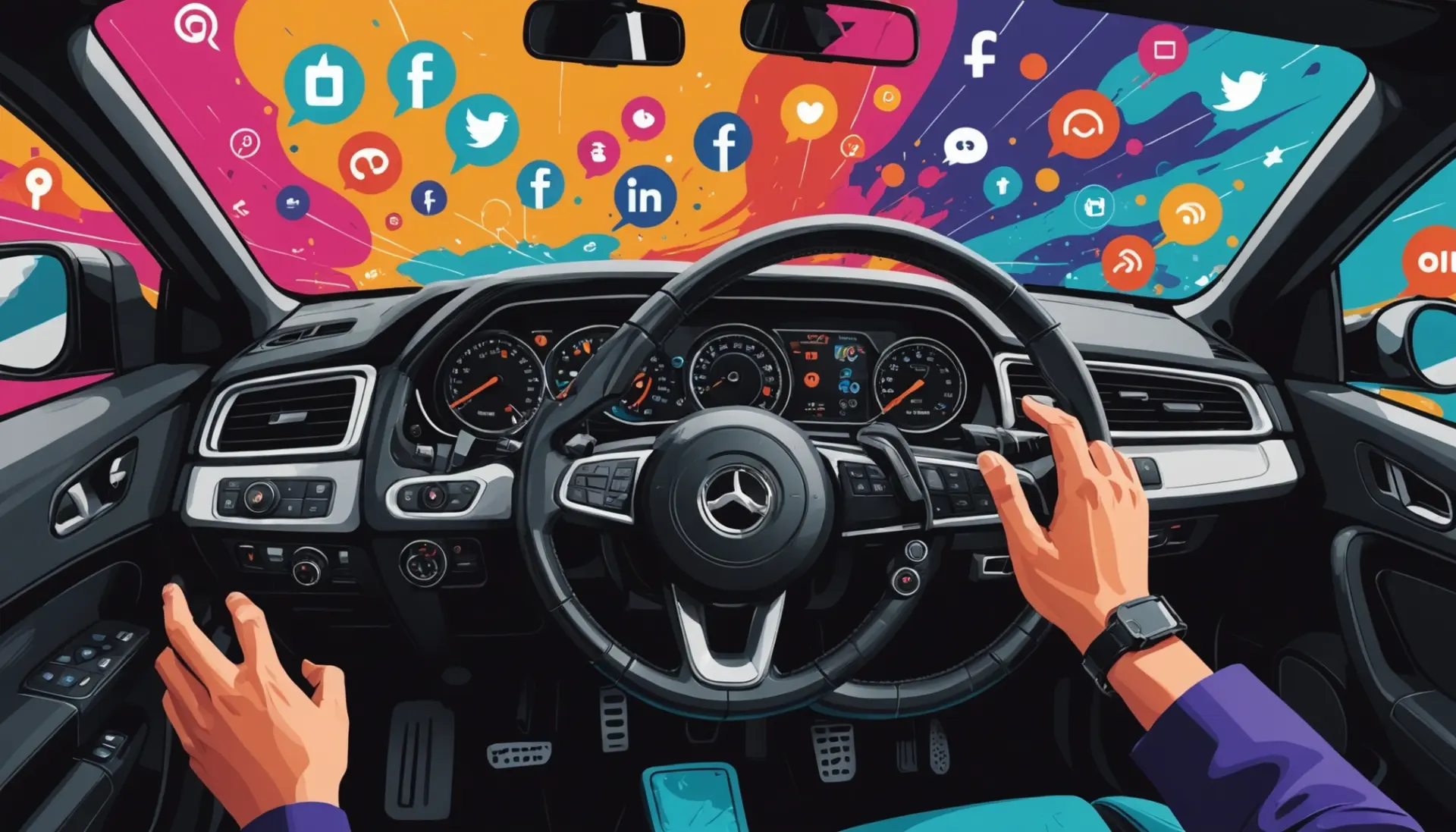

Intro: What Is Turn Signal Slang?
Turn signal slang has been cropping up on TikTok, Twitter, and group chats, and yeah, it deserves a quick cultural autopsy. The phrase started as a literal joke about drivers who flick a blinker but never actually turn, and it mutated into a shorthand for people who give signals but never follow through.
It sounds niche, but once you hear it in context you will start spotting it everywhere: DMs, relationship tweets, and that one friend who always almost texts back but ghosts. Honestly, it feels like the perfect Gen Z complaint about emotional availability.
Table of Contents
What Is Turn Signal Slang?
If you are wondering what turn signal slang actually means, the quick version is this: it describes someone who gives hints or small signs of interest but never commits. Think of someone who always says they will come hang out, then cancels, or someone who drops flirtatious messages but never asks you out.
It feels close to “mixed signals” but with a more mocking tone. People use it to call out performative behavior: the signaling is visible, the turn never happens. The phrase is blunt and a little petty, which is why it stuck.
Origins of Turn Signal Slang
The literal backstory comes from driving culture. People have been joking about drivers who signal and do not turn for decades, which is why the phrase resonated so fast. For a deep dive into the actual device, see the Wikipedia entry on turn signal.
On social platforms the idea migrated to interpersonal behavior. Teens and twenty-somethings began using car language to describe relationships. It is the same vibe that gave us phrases like “ghosting” and “benching,” where everyday actions are translated into driving metaphors.
How People Use Turn Signal Slang Today
People use turn signal slang as a verb, a noun, and a sarcastic adjective. You might hear: “Stop turn signaling me,” or “He’s straight up turn signal slang.” It is flexible, and that flexibility helped it spread across platforms.
It shows up in complaints and in petty clapbacks. On Twitter someone might post a screenshot of a flirty DM chain with the caption “turn signal slang, the movie.” On TikTok creators will lip sync over a text thread where someone promises plans and then cancels, tagging it with the phrase. It’s shorthand for unreliable signals.
Examples and Conversations
Okay so here are real-feeling examples that you might hear in group chat or see in captions. These are stylized but realistic: they capture tone and rhythm rather than being word-for-word transcripts.
Person A: “He keeps texting me at 2am acting cute.”
Person B: “Bro, that is turn signal slang. Ask him to pick a day or move on.”
Text screenshot caption: “Said he’d pick me up Friday, now he’s ‘busy’—turn signal slang energy.”
And the DMs: “Stop turn signaling me if you are not actually gonna invite me out. I am not a waypoint.” People use it to set boundaries while also making a joke out of the drama.
On a broader social level, you will also see memes where the driver aggressively flicks a blinker but keeps going straight, with a caption about dating. Those images are practically the visual shorthand for turn signal slang.
Why Turn Signal Slang Matters
It matters because slang tells us what annoys a generation, and here the grievance is emotional labor and wasted time. Turn signal slang pinpoints a specific frustration: signals without substance. That frustration is common in a post-texting era where intentions are often transmitted in fragments.
Also, the phrase helps people name an experience quickly. Naming something makes it easier to call out and to joke about. With phrases like this, communities are both diagnosing a problem and bonding over the shared annoyance.
Related Terms and Links
Turn signal slang lives near other dating-era phrases. If you want to read more about companion slang, check out pages on ghosting, rizz, and simp for overlaps and contrasts. Ghosting is the abrupt vanish, while turn signal slang is more performative hesitation.
For the literal meaning of signal, Merriam-Webster is useful: signal definition. And if you want to trace memes about driving and social behavior, classic meme aggregators are where those images get traction.
Final Notes and Quick Tips
If someone uses turn signal slang about you, take it as a hint. Either clarify intentions or step back. Clear communication beats clever slang, ngl.
Also, if you are the kind of person who genuinely hates the phrase, you are not alone. Slang can feel peak petty sometimes. Still, it is handy. You will use it, you will roll your eyes, and then you might use it again when the next flaky plan comes along.