



Intro
what does rino mean in politics is a phrase you probably heard at family dinners, on Twitter, or blasting out of a pundit segment. People toss it like a one-word obituary: short, brutal, and judgmental. Ngl, it carries more attitude than a 280-character clapback.
This post explains what does rino mean in politics, where the term came from, how people actually use it, and why it still matters when party loyalty gets messy. I promise real examples, sources, and the kind of dry, slightly bitter cultural context you want when your uncle starts yelling at the TV.
Table of Contents
What Does RINO Mean in Politics? Origins
The basic answer: RINO stands for Republican In Name Only. It labels Republicans whose views or votes are seen as insufficiently conservative. That’s what does rino mean in politics in the raw sense, the short version you’d hear at a rally or online thread.
The term rose to broad use in the late 20th century, though the idea of policing party purity is older. For a tidy historical overview, see the Wikipedia entry on Republican In Name Only. If you want a dictionary-style definition, Merriam-Webster has a clear take too.
What Does RINO Mean in Politics? How People Use It
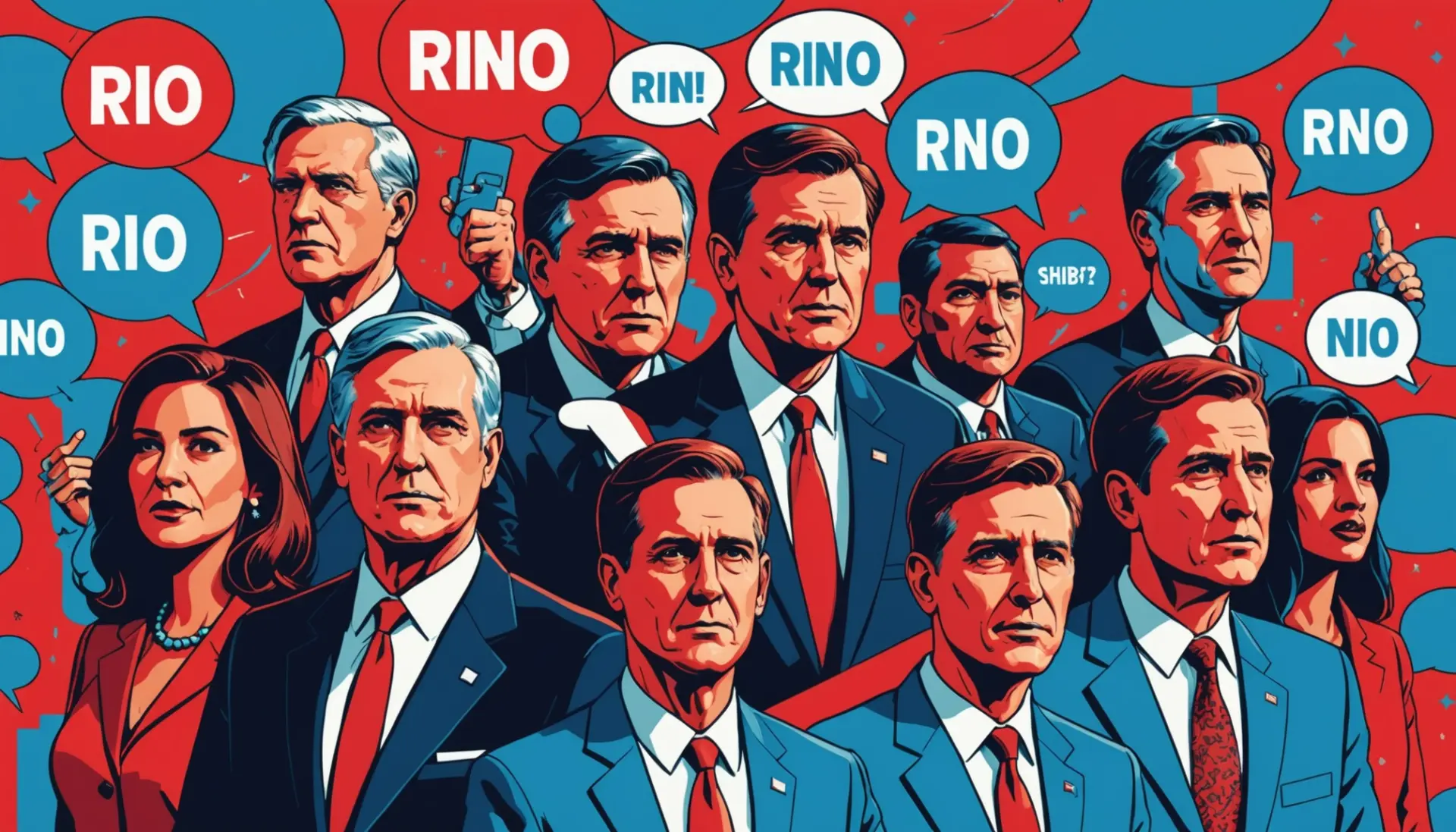
How do people actually use the phrase? Mostly as a political insult. Saying someone is a RINO is shorthand for rejecting their conservative credentials. The accusation can be about policy, personality, or perceived betrayal of a movement.
Usage is flexible. It can be a throwaway line, like “He voted for that bill? Total RINO,” or a strategic stick, used to pressure primaries and silence moderates. The Tea Party era supercharged the term, and later it got recycled under different factions, including during and after the Trump years.
Examples in Conversation
Here are common, real-life ways people say it, cleaned up but faithful to how RINO appears in chats, comments, and quick-fire banter: “Don’t trust him, he’s a RINO,” “She’s just a RINO who votes with the Democrats,” “Stop being a RINO and actually fight for the base.” These are real patterns you hear everywhere from bar talk to conservative forums.
People also use it as a verb, or in slogans: “RINO watch,” “RINO purge,” or “no more RINOs.” That language tends to ramp up when a party splits, like after contentious primaries or when compromises on big bills happen.
Example thread snippet, paraphrased: “Guy: We need electables not extremists. Commenter: You mean RINOs? Guy: No, responsible governance. Commenter: RINO. End of convo.”
Political Impact and Why It Matters
Calling someone a RINO is not just name-calling, it’s a political tool. Labeling undermines credibility and can steer endorsements, fundraising, and primary challenges. The goal is often to move candidates further toward a faction’s preferred positions.
This matters because it changes how parties operate internally. Factional purity tests influenced the rise of the Tea Party and then helped fuel intraparty fights in the Trump era. Lots of electoral math, candidate recruiting, and media framing flows from those fights.
To see RINO in action historically, you can look at how Republican factions targeted incumbents in primaries during the 2010s and later. For context and reporting on intraparty conflicts, mainstream outlets and political encyclopedias track these moments carefully, including historical notes and analysis.
How People Feel About the Label
A lot depends on where you sit ideologically. For hardline conservatives, accusing someone of being a RINO is a righteous call-out. For moderates, the label feels like a cudgel meant to erase nuance. For outsiders, it often looks like internal infighting that voters dislike.
There is also performative use. Calling someone a RINO can gain likes and retweets because it signals identity. In other words, the term is both substantive and performative: it can reflect a real policy critique, or it can be cheap signaling.
Real-World Moments Where RINO Came Up
The term spikes in headlines when party splits go public: think contested primaries, high-profile votes where Republicans cross party lines, or when party leaders back compromise deals. Those are the moments you see “RINO” trending in comment sections.
If you want to watch an example of public shaming and factional politics, read more about party disputes on reputable sources like Merriam-Webster’s definition page and media reports that catalog primary fights and endorsements.
Tactics Behind the Label
How is the label used strategically? It’s simple: call someone a RINO, erode trust among the base, and either push them to change or replace them with a purer candidate. Endorsements follow, donors get cold feet, and local activists mobilize.
This tactic has limits. Sometimes branding backfires if voters prefer electability or moderation. Politics is messy, and being branded a RINO does not always equal defeat. Context and timing matter a lot.
Final Thoughts
So, what does rino mean in politics? It is shorthand for a Republican judged to be insufficiently conservative, used both as critique and as a political weapon. That is the blunt truth, and the social truth: it tells you as much about the speaker as it does about the labeled person.
If you want deeper slang reads, check similar entries on the site like rizz slang meaning and based slang meaning. For a look at how political slurs move through culture, see sellout slang meaning too.
Quick recap: what does rino mean in politics, short answer again. Republican In Name Only, used as both insult and tool, with consequences for careers and party coalitions. Use the label carefully, or at least know why someone is using it.
Want more slang breakdowns written like a real human? Stick around. Or don’t. But now when your cousin drops “RINO” at Thanksgiving, you can respond with context, a small eye roll, and maybe a link to a dictionary.