

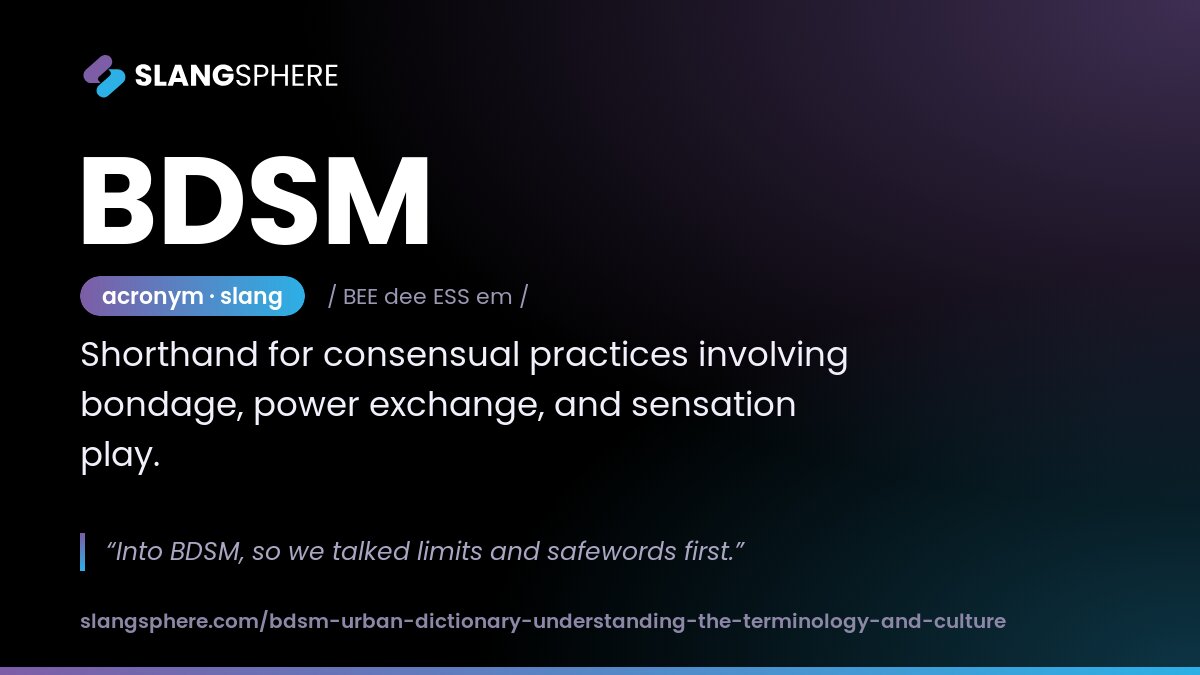
BDSM is an initialism for bondage, discipline, dominance, submission, sadism, and masochism, used to describe a range of consensual kink practices that center on negotiated power exchange and agreed-upon sensations. The term covers activities, identities, and community practices where consent, safety, and communication matter more than the specific acts.
What it means
Main meaning: BDSM groups three paired concepts: Bondage and Discipline, Dominance and Submission, and Sadism and Masochism. Together they name consensual sexual or erotic practices that can include restraint, role power play, and controlled sensation or pain.
Secondary meanings: People also use BDSM as a social label, an aesthetic, or shorthand for “kink” subculture. It does not automatically mean abuse, nonconsent, or criminal behavior when practiced responsibly.
Where it comes from
The exact origin of the specific initialism is unclear; it developed as a catchall to group older terms like sadism and masochism with bondage and dominance practices. Modern definitions emphasize consent and negotiated rules rather than pathology, as reflected in contemporary reference sources like the APA Dictionary and standard dictionaries such as the Oxford Learner’s Dictionary.
How people use it
- “I like BDSM, but I’m a switch depending on my partner.”, an identity statement about roles and flexibility.
- “We negotiated a light BDSM scene and agreed on a safeword.”, talking about planning and consent before play.
- “That movie has BDSM themes, but it misrepresents consent.”, commenting on media portrayal versus real practice.
- “Posting BDSM content, CC if you want resources.”, sharing community resources or trigger warnings.
- “Not comfortable with BDSM, so I said no.”, clear refusal or boundary-setting in dating or sexual contexts.
Tone and when not to use it
BDSM is explicitly sexual and adult oriented. Use it in contexts where participants are clearly adults and consent is possible. Avoid bringing it up at work, in settings with minors, or as a casual insult that confuses kink with abuse.
Because BDSM practices can involve intense physical or emotional experiences, treat the term with seriousness. Joking about nonconsensual harm or using it to shame people is inappropriate.
Similar terms
kink, fetish, D/s, S&M, bondage, kink community
FAQ
- What does BDSM mean on TikTok? On TikTok it usually means the same thing: people either identify as into kink, post explanatory content about roles and safety, or critique media representations. Context makes a difference between identity, aesthetics, and practice.
- Is BDSM abusive? No, not when it follows informed consent, clear boundaries, and safety measures. Abuse is nonconsensual; responsible BDSM emphasizes negotiation, safewords, and aftercare.
- Is BDSM the same as S&M? S&M refers specifically to sadism and masochism. BDSM is broader and groups S&M with bondage/discipline and dominance/submission dynamics.
