


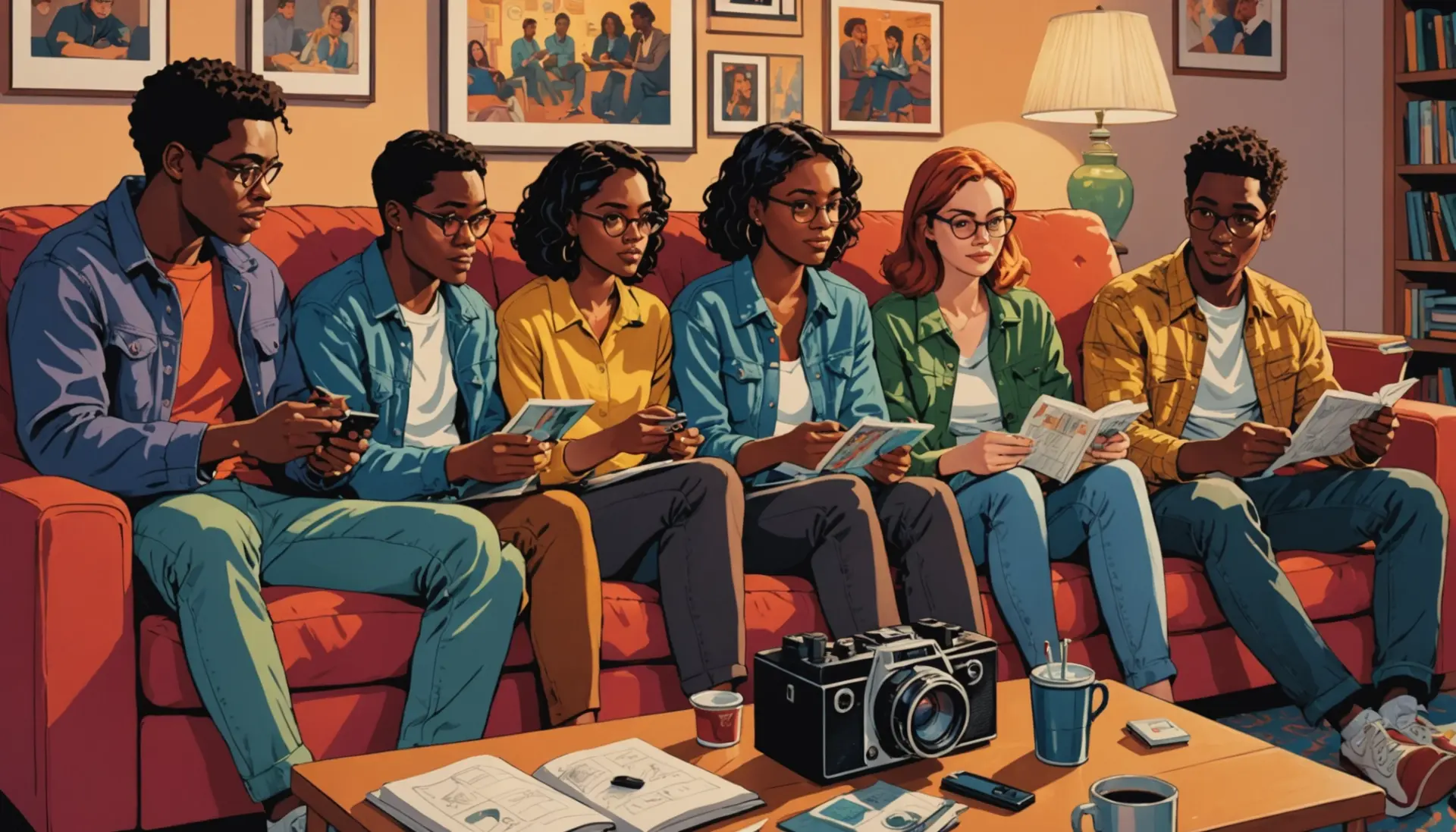

What Does Film Nerd Slang Mean?
Film nerd slang is the language people use when they obsess over camera lenses, auteurs, and movie trivia. It covers shorthand, in-jokes, and shorthand references that make entire conversations possible with a single phrase, like “long take” or “auteur theory” used ironically.
If you grew up quoting Tarantino and arguing about aspect ratios, you already know the vibe. This isn’t just jargon, it’s culture: fandoms bonding over cinephile flexes and deliberately obscure references.
Table of Contents
Common Film Nerd Slang Terms
When people talk about film nerd slang, they’re usually referring to shorthand like “SNL” for single long take jokes, “mise” for mise-en-scene, or calling a director an “auteur” in a half-serious way. These terms migrate from academic film criticism into Twitter threads, Reddit AMAs, and group chats with alarming speed.
Here are a few that actually get used in real convos. I’m not compiling an academic glossary, just things you hear in bar arguments and comment sections.
- Mise: Short for mise-en-scene, used casually to talk about how everything in the frame works together.
- Auteur flex: Calling out an auteur’s signature move, usually with a side-eye emoji.
- Long take / one-take flex: Bragging rights for scenes shot in a single continuous take.
- Practicals: Practical effects, as opposed to CGI, often invoked like it’s a moral choice.
- Grain: Used to describe film stock texture, often ironically on digitally shot films.
None of these sound flashy alone. Together they add up to a dialect. You can tell a newbie because they say “cinematic” every other line. A true film nerd will say “that dolly move is so Bogart-esque,” and everyone knows what they mean.
How to Use Film Nerd Slang Without Sounding Try-Hard
Want to use film nerd slang without coming off like a poser? Start by listening. The quickest way to be insufferable is dropping “auteur” on a rom-com thread and expecting applause.
Context matters. If someone says “practicals FTW” in a VFX thread, they mean it. If a friend says “that sequence is pure mise,” they probably love how the props and lighting did the heavy lifting.
Examples, because real life helps more than rules. Imagine this group chat exchange:
Alex: “Did you see the one-take in ‘1917’? Insane.”
Jamie: “Yeah but the mise was doing all the emotional work, not just the camera.”
Maya: “Practical blood > CGI any day.”
That little back-and-forth is pure film nerd slang in motion, with shorthand and references layered on top of plain opinions. Use it like that, not like you’re auditioning for a film studies exam.
Resources and Further Reading
If you want to study this dialect for real, a few places are worth bookmarking. Wikipedia has a useful primer on film terminology, which is handy when you want to check if your glossary guess was right: Film terminology – Wikipedia.
Also, if you need a quick definition of cultural buzzwords like “nerd,” Merriam-Webster is a solid source: Merriam-Webster: nerd. And for those meme-ified bits of cinephile culture, Know Your Meme sometimes tracks how a phrase jumped from Tumblr to Twitter to TikTok.
For more casual slang lookups, check out related entries on SlangSphere like rizz and stan. If you want vintage context on selfish-sharing slang, see bogart.
Bonus Tips and Tricks
Okay so some quick pro tips. If you call out a shot as “chaplin-esque” you better know which Chaplin era you’re talking about. Name-dropping without specifics reads poorly.
Also, beware the trap of using film nerd slang as gatekeeping. People who try to flex their vocabulary to shut others out are boring. Use the words to invite conversation not exclusion.
Finally, stay humble. Even critics get things wrong. That wrong take you laughed at last week might be the next week’s cult favorite.
Final Thoughts
Film nerd slang is not just a set of terms, it’s a social toolkit for fans who love the craft and the gossip. It helps you convey big ideas quickly and bond over shared references, from classic auteur debates to Twitter hot takes about CGI.
So go on, say “mise,” argue about grain, and call a director an auteur if you mean it. Just remember to keep it conversational, not performative. And if someone responds with a meme reference you don’t get, google it, learn, and then clap back.