


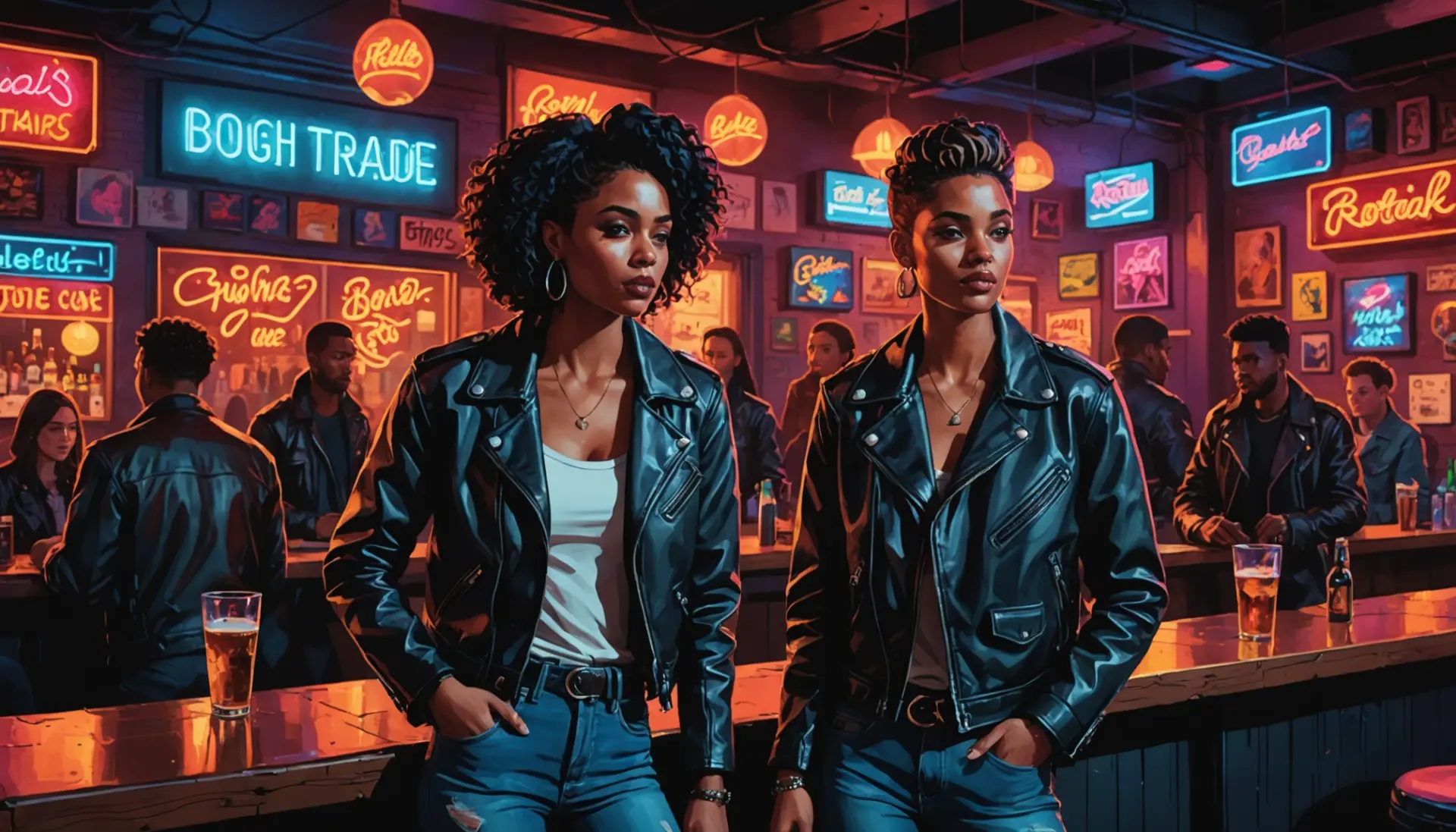

Rough trade urban dictionary entries are messy, affectionate, and sometimes flat-out problematic, and yes, they tell you a lot about sex, class, and desire. I found myself scrolling through multiple Urban Dictionary pages and old queer memoirs and thinking, wow, this one phrase carries a weird cultural freight.
Table of Contents
Rough Trade Urban Dictionary: Definition and Origins
The straightforward Urban Dictionary vibe for rough trade usually reads like: “a tough-looking or working-class guy, often desirable because he’s dangerous or sexually exciting.” That gloss captures the core idea, but it flattens the layers: masculinity, class signifiers, and the thrill of risk all bundle into the term.
Urban Dictionary entries for rough trade often come from personal confession-style snapshots, where people describe hookups or fantasies. Those user-submitted definitions reveal how the phrase shifted meaning across decades and scenes, which is why the Urban Dictionary record is so noisy and useful at once.
Rough Trade Urban Dictionary: Modern Usage and Examples
On social media you will see rough trade used both jokingly and seriously: tweets like “met a total rough trade at the gig last night” or an Instagram caption tagging a leather-jacketed beau. In these uses the term usually signals a vibe more than a strict category: tough, a little dangerous, maybe unpredictable.
People also use rough trade ironically, especially younger queers who have inherited the term but want to play with it. That irony is visible in meme culture and queer TikTok, where someone might lip sync to an old song and caption it, “me chasing rough trade energy.” Urban Dictionary reflects those layers, because entries range from romanticized to cautionary.
History, Class, and Queer Contexts
Historically the phrase rough trade appears in mid-20th century queer writing, where it sometimes meant a hookup with a working-class or straight man who might be dangerous or uninterested in a real relationship. Writers like William S. Burroughs and certain beat and punk subcultures referenced similar archetypes, so the phrase carries a literary lineage too.
If you want a quick primer on how language like this circulates, Wikipedia has some useful context about slang and subcultural terms. See Wikipedia: Rough trade for a basic starting point and then you can compare it to how people describe it online.
How People Use It in Real Life
Okay so, examples. Real conversation samples help more than a lecture. People text and DM with the kind of shorthand Urban Dictionary records, and that makes the meanings practical. Here are a few realistic examples you might actually see in a chat.
Friend A: “Saw him at the bar, total rough trade haha.”
Friend B: “You into that?”
Friend A: “Ngl, yes. But also scary vibe.”
Profile bio: “Into vintage denim, live shows, and a little rough trade energy.”
These examples show the flex: sometimes it is flirtation, sometimes an aesthetic flex, and sometimes a warning. Urban Dictionary captures all three because people submit whatever story they want the world to read.
Nuance and When the Term Feels Problematic
Not everything in Urban Dictionary is scholarly, and rough trade entries can be blunt about class and race in ways that make you uncomfortable. The term sometimes fetishizes vulnerability or poverty, which is not cute. That tension is important to call out when you browse the Urban Dictionary entries.
There are also safety issues baked into the romanticization of danger. If someone uses rough trade like a status symbol, remember it can normalize risky situations. That is one reason why some people avoid the term or use it with heavy irony.
Compare: Other Sources and Why UD Displays So Many Voices
Urban Dictionary is a crowdsourced snapshot, which means the rough trade entries are plural: you get nostalgia, erotica, class critique, and memes all at once. For a contrasting, editorially vetted take, Merriam-Webster gives you a stable lexicon entry for words like “rough,” though it lacks the lived queer nuance. See Merriam-Webster: rough if you want the standard dictionary angle.
Also check out the Urban Dictionary page itself if you want to scroll the raw submissions: Urban Dictionary: rough trade. It is raw, often messy, and sometimes revealing in ways a formal source will never be.
Pop Culture, Songs, and Visibility
Rough trade shows up in music and cinema from punk records to queer indie films where the edgy partner functions as a plot device. Think of lyrics that romanticize risky lovers or scenes that stage class tension as erotic. That cultural repetition is part of how the Urban Dictionary entries sound so familiar: people are echoing songs and scenes they grew up with.
Even contemporary influencers will name-check rough trade as an aesthetic, tying it to leather jackets, cigarettes, or dive bars. That aestheticization turns a messy social reality into a moodboard, and Urban Dictionary entries often read exactly like moodboard captions.
Conclusion: Should You Say It?
Short answer: use context. The phrase rough trade urban dictionary collects is useful for understanding how people talk, but you should be careful repeating it out loud without thinking. Context matters more than clout, and terms that flirt with class or vulnerability deserve nuance.
If you want slang with less baggage, scope other entries on SlangSphere, like rizz or the classic bogart. That will show how slang evolves from vibe to vocabulary to critique.
Final thought: the Urban Dictionary record for rough trade is a cultural archive, messy and human. Read it, learn from it, and maybe think twice before using the term as a casual compliment.