Scorched earth originally means a military tactic of destroying crops, supplies, and infrastructure so an enemy cannot use them, and it is now commonly used figuratively to describe a ruthless, all-or-nothing attack or retaliation. The phrase appears across news, politics, law, and online conversation.
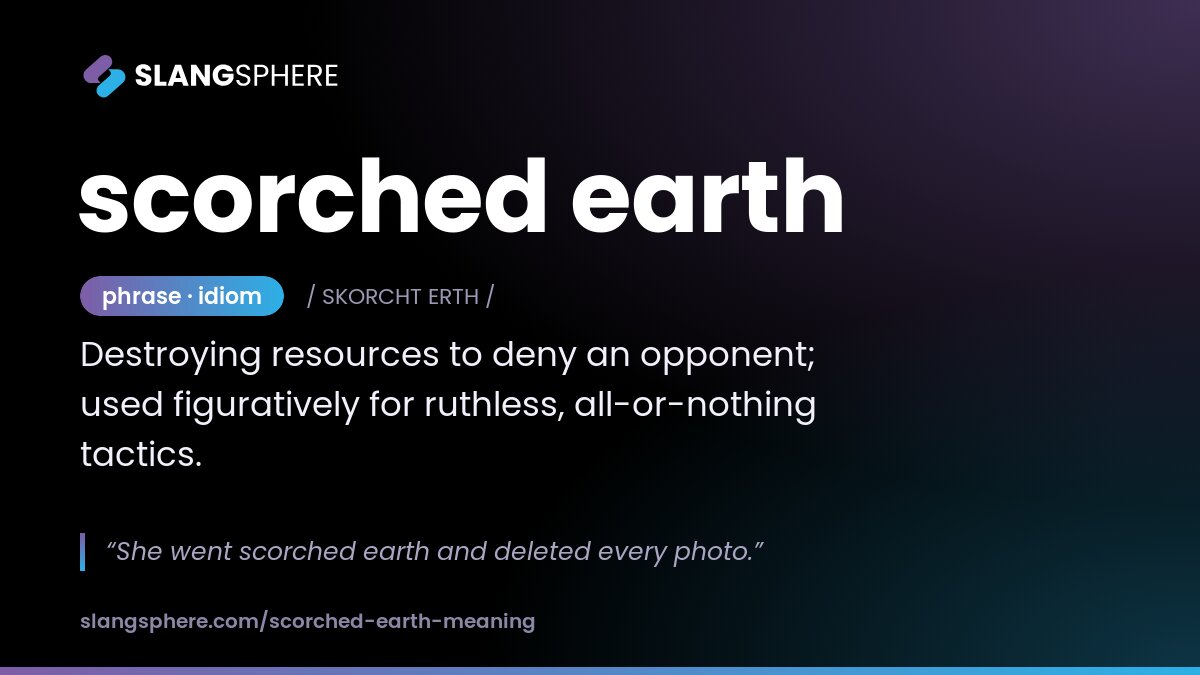
([collinsdictionary.com](https://www.collinsdictionary.com/dictionary/english/scorched-earth))
What it means
Main meaning: the literal tactic of burning or destroying anything that could help an advancing enemy, including food, buildings, and transport. Figurative meaning: any deliberate strategy that wrecks everything useful to an opponent, or a last-ditch, punish-everyone response aimed at leaving no gains for the other side.
([encyclopedia.com](https://www.encyclopedia.com/humanities/dictionaries-thesauruses-pictures-and-press-releases/scorched-earth-policy))
Where it comes from
The tactic itself is ancient, but the English phrase is usually traced to a 1930s translation of the Chinese term jiāotǔ, used during fighting in China. The idea predates that English phrasing by centuries, and historians note multiple earlier examples of similar tactics. The exact first English use is not completely settled in public sources.
([etymonline.com](https://www.etymonline.com/word/scorch))
How people use it
-
We are going scorched earth on their advertisers.
Used in a tweet or caption to mean launching an aggressive campaign that targets everyone who supports an opponent.
-
The lawyer ran a scorched earth discovery phase.
Used in legal contexts to mean exhaustive, aggressive tactics meant to overwhelm the other side.
-
After the breakup she deleted all photos and blocked him, full scorched earth.
Casual social use to describe cutting ties and erasing traces in a dramatic way.
-
The board took a scorched earth approach to the hostile takeover.
Corporate use for extreme defensive or offensive business moves that sacrifice relationships or resources.
-
If they fire her, she might go scorched earth in the press.
Predictive usage suggesting public retaliation that spares no one.
Tone and when not to use it
The phrase carries violent and destructive connotations because of its military origin, so it can sound severe or dramatic. It is fine in journalism, political commentary, and blunt workplace talk, but avoid it in sensitive contexts involving trauma, loss, or where metaphorical violence would be inappropriate.
Similar terms
burn bridges, nuclear option, take no prisoners, all-or-nothing, burn it down
FAQ
- What does scorched earth mean on social media? On social platforms it usually describes extreme retaliation, mass unfollowing, blocking, public shaming, or campaigns meant to ruin an opponent’s support.([urbandictionary.com](https://www.urbandictionary.com/define.php?term=Scorched+Earth))
- Is scorched earth rude or violent? The phrase is violent in imagery because it refers to destruction, but it is commonly used metaphorically. Still, avoid using it around people who lived through war or in contexts where the literal violence is sensitive.
- Is scorched earth the same as burning bridges? Related, but different: burning bridges usually means ending relationships so you cannot go back, while scorched earth implies destroying resources or options more broadly to deny them to an opponent.
- Where did people first use the term? Modern English usage is usually traced to reporting on 1930s China as a translation of jiāotǔ, though the tactic itself is much older and appears in many historical campaigns.([etymonline.com](https://www.etymonline.com/word/scorch))
Examples of the phrase show up in forums and comedy dialogue as a vivid shorthand for ruthless tactics, and online dictionaries capture both literal and figurative senses.([reddit.com](https://www.reddit.com/r/NoStupidQuestions/comments/11rrfci))