


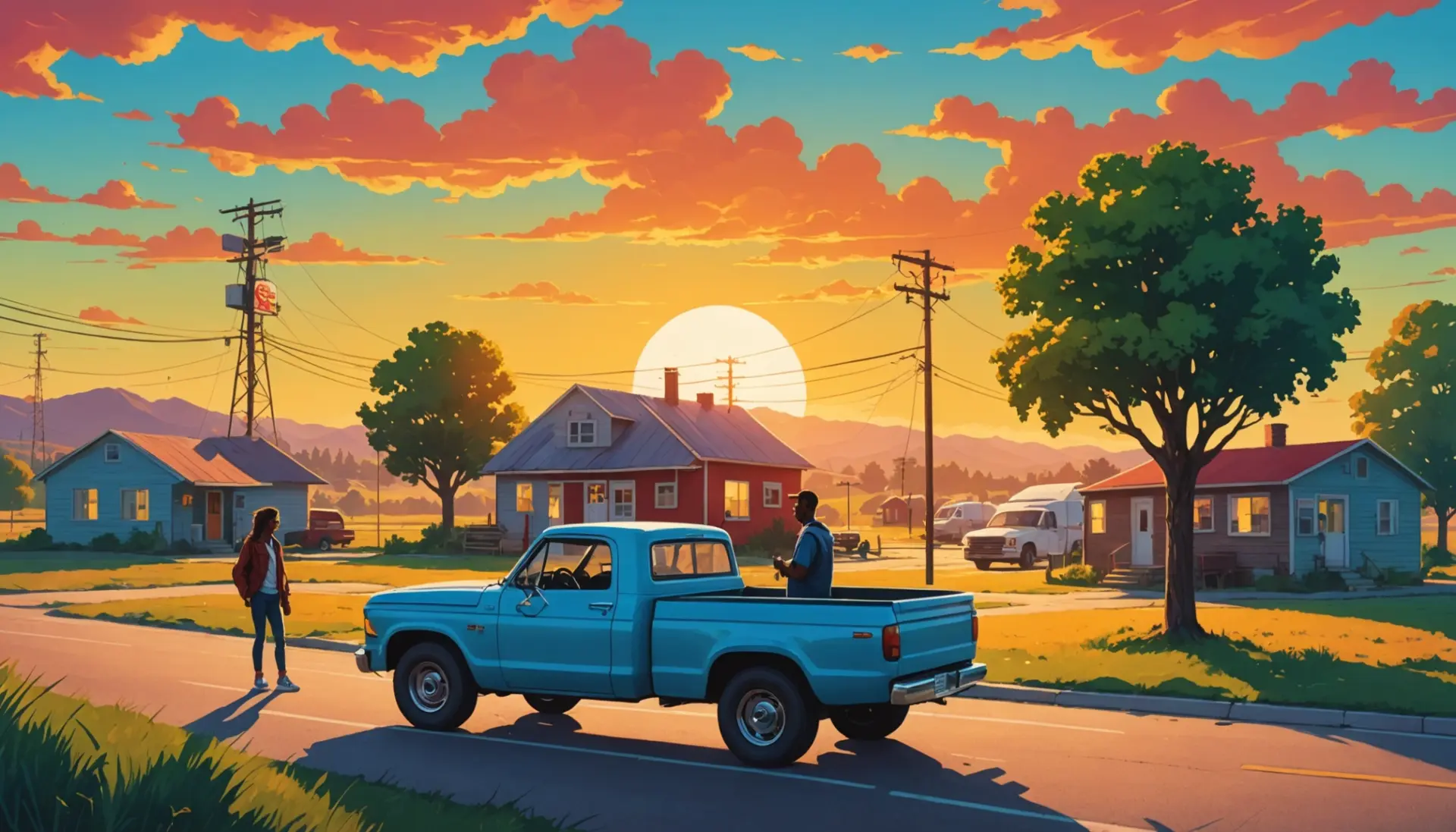

Sticks Slang: What It Means
Sticks slang is the casual phrase people use when they want to call somewhere remote, rural, or just painfully far from city conveniences.
Think backroads, one gas station, and zero cell service. It is shorthand, and it can be affectionate or dismissive depending on tone.
Table of Contents
History and Origin
The phrase comes from older English usage where “stick” could mean a wooded area or a small place marked by a stick of land. Over time, people started saying “the sticks” to mean those tree-heavy, out-of-the-way spots.
Lexicographers back this up. For a quick lookup, Merriam-Webster records informal senses of “sticks” meaning a remote place, and Wikipedia discusses similar concepts under rural area and boondocks.
So, sticks slang has roots in literal landscape talk, then grew into a cultural shorthand for isolation, small towns, or the countryside.
Sticks Slang Examples and Dialogues
Examples are how you really learn slang, so here are some actual-sounding lines you might hear among friends. Notice the tone shifts depending on context.
“You sure you want to camp out in the sticks? My last trip there had one light for 20 miles.”
“We went out to my uncle’s place in the sticks, and honestly it was kind of therapeutic.”
On social media people use it like this: “Concert got moved to the sticks, might still go lol” or “If the Wi-Fi drops again I’m moving to the sticks. Kidding, kind of.” Those could be tweets or DMs, but they are legit real-world usage patterns.
Hip-hop and country musicians both use the idea of “the sticks” differently. Country songs lean into the romanticized version of small-town life. Rap sometimes flips it, using “the sticks” to emphasize distance from industry centers or to flex resilience.
Sticks Slang: Regional Variations and Related Terms
Different areas have cousins to sticks slang. In the United States people say “the boonies,” “the boondocks,” or “out in the middle of nowhere.” In the UK you might hear “up the sticks” or simply “the sticks” with the same meaning.
Each term carries slightly different flavor. “Boonies” is playful. “Boondocks” can sound harsher. “The sticks” tends to be neutral and widely understood, which helps it survive across dialects.
If you want a semantic deep-dive, Wikipedia’s page on rural area gives good background on structural differences between city and countryside living. For the literal dictionary take, Merriam-Webster’s entry supports the informal use of “sticks.”
How to Use Sticks Slang Without Being Rude
Using sticks slang is easy, but tone matters. If you say “We went to the sticks, it was trash,” you might offend someone who loves that place. Say “We drove out to the sticks for a weekend, it was peaceful,” and you land differently.
Ask questions. Show curiosity. Compliment the food, the people, or the scenery. Language signals respect as much as meaning does.
Also, context is king. Saying “my phone dies out in the sticks” is practical. Saying “you live in the sticks” directly to someone can come off as dismissive.
Quick Checklist for Usage
- Use sticks slang when describing remoteness or rural life.
- Mind tone, especially on first mention with locals.
- Pair it with specifics: “road trip to the sticks” lands better than vagueness.
Final Notes and Cultural Footprint
Sticks slang is simple, flexible, and still widely used. It crops up in tweets, song lyrics, and everyday talk whenever someone wants to shorthand a rural setting.
It can be affectionate or a dig. Context and tone will tell you which. And if you want to read technical definitions, check Merriam-Webster, or the broader topic on Wikipedia.
For more slang with a similar vibe, check out boonies and how people talk about rural spaces, or read our take on neighborhood flexing at rizz for contrast in urban slang.