


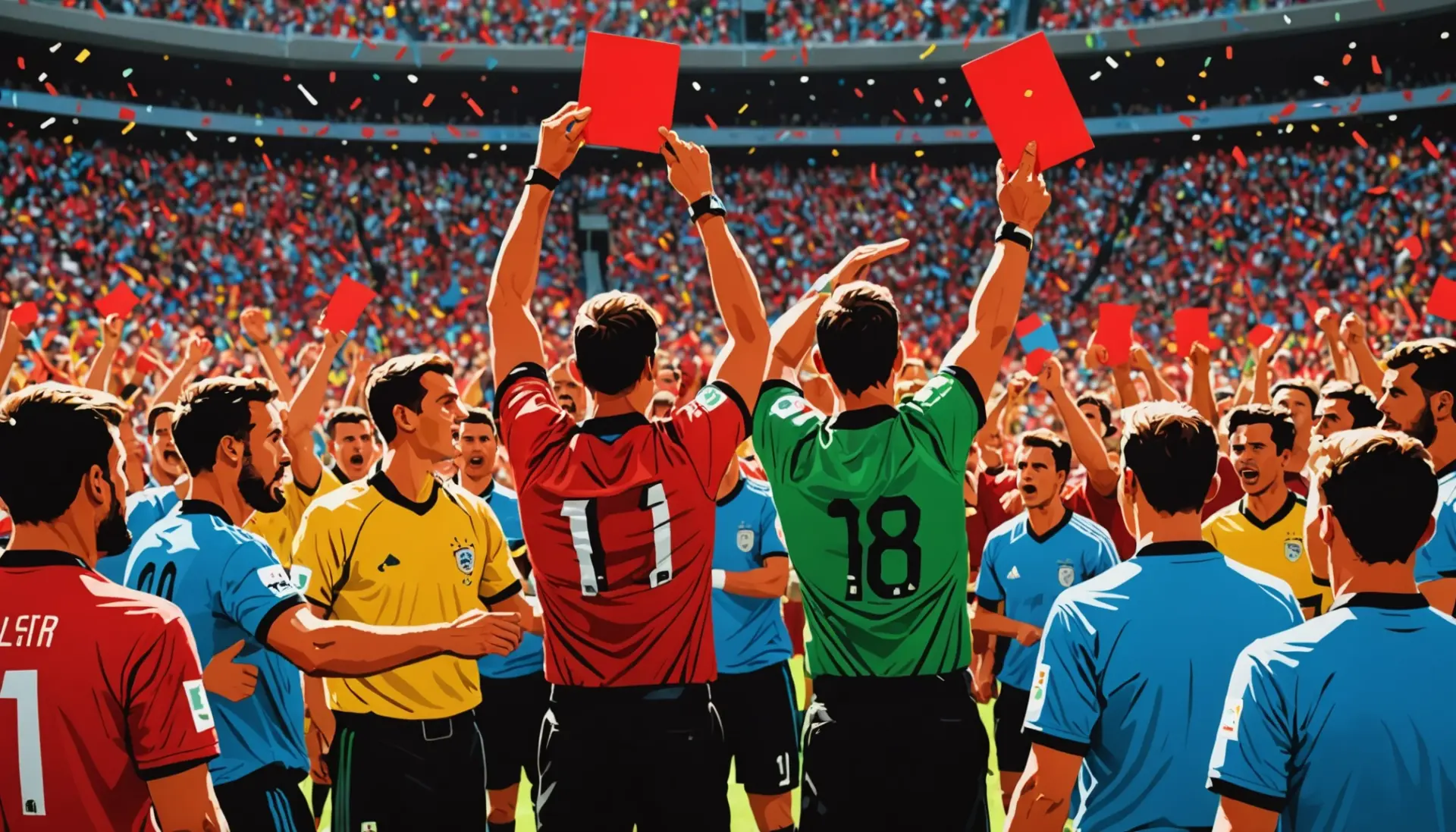

Introduction
what does a red card mean in soccer world cup is the question I get asked all the time from friends who only watch the big moments, not the rulebook. Honestly, it sounds simple: a red card means a player is sent off. But like most soccer things, there is nuance, drama, and real consequences beyond the gasp from the stands.
Okay so before we get into the spicy stories and rulebook stuff, here is a tidy roadmap of what we will cover so you can skip to the bits you care about.
Table of Contents
What Does a Red Card Mean in Soccer World Cup? The Basics
The short answer to what does a red card mean in soccer world cup is this: the referee orders the player off the pitch immediately and the team plays with one fewer player for the rest of the match. No substitutions can bring that player back. It is an immediate numerical and tactical penalty.
Technically, a red card is shown for serious foul play, violent conduct, denying an obvious goal-scoring opportunity by hand or foul, using offensive or insulting language, or receiving a second yellow in the same match. These categories come straight from the Laws of the Game set by IFAB and enforced by FIFA during World Cups. See more on the official IFAB Laws of the Game and the historical context on Wikipedia: Red card (association football).
What Does a Red Card Mean in Soccer World Cup? Match Impact and Suspensions
Beyond the immediate send-off, the answer to what does a red card mean in soccer world cup includes official suspensions. A straight red usually means at least a one-match ban, often more if the offense is violent or abusive. Tournament disciplinary committees can extend bans.
Practically, a red card can flip the script. Down a man, teams shift formation, protect leads, or exploit space. Coaches scramble. Fans rage. The next match might be without a key starter, which matters massively in knockout football where every minute counts.
Famous World Cup Red Cards and Cultural Moments
Some red cards become cultural shorthand. Think Zinedine Zidane getting a red in the 2006 World Cup final after the headbutt. It was a moment that eclipsed the whole match for many people, and now whenever someone says red card in a World Cup context, that final flashes up in memory.
David Beckham’s 1998 red card, after he kicked Diego Simeone, is another example. It changed England’s tournament and his public image, at least temporarily. And then there are the lightning-fast dismissals like José Batista in 1986, who holds the record for one of the quickest World Cup red cards. These acts stick in cultural memory and get referenced in memes, documentaries, and bar conversations.
How Players, Fans, and Socials React
So how do people actually talk about it? Real life examples: on WhatsApp you might see, “Bro, what does a red card mean in soccer world cup? He literally shoved the ref?” Or on Twitter a trending reply could read, “If he gets a red in the World Cup that’s it for the manager.”
These are casual, immediate takes that mix confusion with hot takes.
NG L, the social reaction can be savage. Fans will call for bans, pundits will re-litigate the decision for days, and highlight reels will loop the incident like a guilty pleasure. It is why refs are both celebrities and scapegoats.
Quick FAQ and Real Examples
Q: Does a red card always mean suspension? A: Yes, usually at least one match, and more for violent conduct. The tournament committee decides final sanctions. Q: Can a player be sent off after the match? A: Yes, referees can issue a red after the final whistle if an incident is reported or observed.
Conversation examples you can steal: “Dude, what does a red card mean in soccer world cup? Can he play in the next game?” or “That tackle deserved a red, not a yellow. What does a red card mean in soccer world cup—it’s a send-off, man.” These are the sorts of lines I actually hear in pub chats during knockout nights.
Referee Technology, VAR, and Controversy
VAR has complicated the answer to what does a red card mean in soccer world cup because it introduces review processes. Some red cards are overturned, some are upgraded from yellow to red after VAR review, and some incidents are called back for added bans after the fact. That creates extra drama and extra talking points for pundits and fans alike.
For those who want to read up on the official mechanisms, FIFA has materials explaining VAR protocols, and IFAB lists the exact red-card offenses in the Laws. If you love the rules like I do, check the official refs primer at FIFA.
Disciplinary Committee and Post-Match Sanctions
The disciplinary committee is the bureaucratic follow-up. After the match, they can review incidents that the referee missed or that deserve further punishment. So the short answer to what does a red card mean in soccer world cup is immediate send-off plus likely suspension, and the long answer adds committee review and potential extra bans.
That matters in tournaments where a star player missing a quarterfinal or semifinal can change everything. Coaches plan for contingencies, but sometimes there is simply no replacement for what was lost on the field.
Language and Slang: How Fans Say It
Fans have slangy shorthand too. “Red’d” means sent off. “Straight red” means immediate dismissal with no second yellow. You will also hear people say “he got a marching order,” or just “he got sent.” But when someone actually asks, “what does a red card mean in soccer world cup,” they usually want the official weight of the punishment, not the slang.
On SlangSphere we cover how sport terms cross over into everyday language. See related slang pieces like rizz or booking to get how words travel from pitch to text thread.
Final Thoughts and Takeaways
If you only remember one thing from all this, remember the core: what does a red card mean in soccer world cup? It means immediate send-off, a team forced to play shorthanded, and usually at least a one-match suspension. The ripple effects can decide tournaments and shape careers.
Red cards produce iconic moments, righteous outrage, and internet content for years. If you want the rulebook specifics, read the IFAB Laws link above and the historical page on Wikipedia. And if you want to understand the fan reaction side, check the chats and memes after any big World Cup match. They tell you more about culture than stats sometimes.
External Sources
Official Laws: IFAB Laws of the Game. Historical context: Wikipedia: Red card (association football).
Internal Links
Want more slang linked to sports and fandom? Try our takes on rizz and booking for how fans and players talk in short form.