


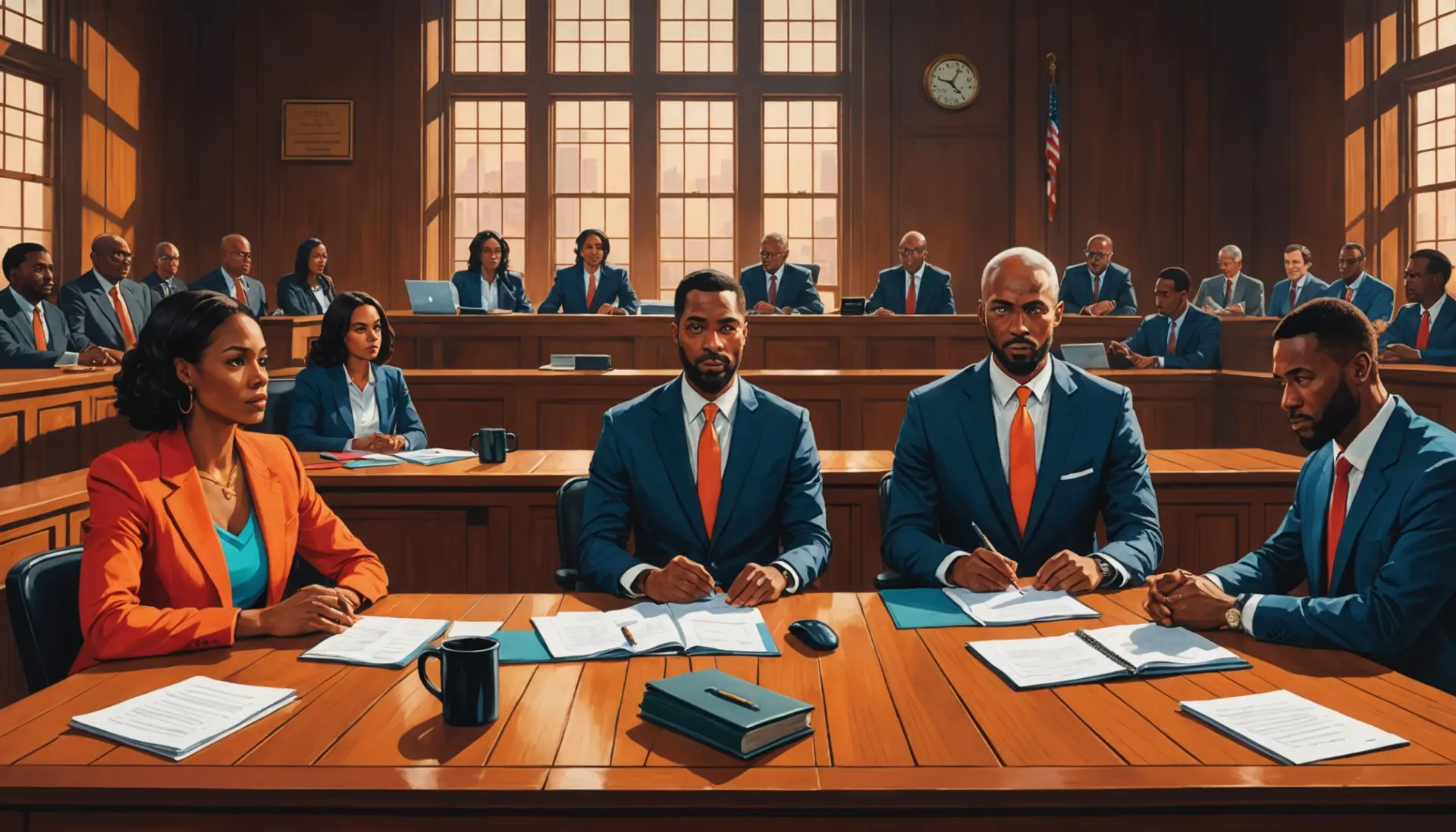

What does deadlocked mean in a trial? If you’ve ever watched Law & Order reruns, banged through a true-crime doc, or followed courtroom threads on Reddit, you’ve probably heard the term tossed around like confetti.
Table of Contents
What Does Deadlocked Mean in a Trial? The Definition
At its core, what does deadlocked mean in a trial is pretty simple: it means the jury cannot come to the required agreement on a verdict after reasonable deliberation.
Legally that often translates to a “hung jury,” where jurors are stuck in a split that they can not resolve, usually because some need to vote guilty and others insist on not guilty.
What Does Deadlocked Mean in a Trial? Why It Happens
Why do juries get deadlocked? People bring every kind of baggage into a jury room: personal bias, different thresholds for proof, varying attention spans, and sometimes outright confusion about the law or the evidence.
Also, social dynamics matter. A dominant personality can sway a room, or conversely, a few stubborn holdouts can block consensus, and then you end up with a deadlocked jury.
Consequences and Next Steps
When jurors tell the judge they are deadlocked, the judge usually gives what lawyers call an “Allen charge” or an instruction urging reconsideration, nudging jurors to re-examine their views while reminding them not to abandon honest convictions.
If the jury still can not reach a decision after further deliberation, the judge may declare a mistrial for that count because of a deadlocked jury, and the prosecution can often retry the case with a new jury.
So knowing what does deadlocked mean in a trial matters, because it changes the playbook: mistrial, retrial, plea negotiations, or even dismissal in some rare situations.
Real Examples and Usage
How do people actually say it in conversation? Real talk: “The jury was deadlocked, so the DA offered a deal,” or “They declared a mistrial after three days; the jury was deadlocked.”
Friend A: “Did you hear about the case?”
Friend B: “Yeah, the jury’s deadlocked. They’re gonna retry, I think.”
On social media you’ll see lines like, “Jury’s deadlocked, tryna see what the DA does next,” and in more formal reporting you’ll get, “The jury remained deadlocked after several hours of deliberation.” Those are all the same idea, different tone.
How Common Is a Deadlocked Jury?
Deadlocks are not daily occurrences, but they’re not rare either. In high-profile cases people notice instantly, because a deadlocked jury pauses the narrative and leaves a public craving closure.
Think of it like a streaming cliffhanger. Remember how the O.J. Simpson trial split public opinion, or the buzz around “Making a Murderer” that made viewers debate evidence for months? Deadlocked juries create that same unsatisfying pause in real life.
Legal Sources and Further Reading
If you want the straight legal scoop check the general entry on hung juries on Hung jury – Wikipedia, and if you want dictionary-level clarity look at Merriam-Webster on deadlock.
For courtroom procedure from a law-school angle see resources like Cornell Law School: Jury, which explains how juries are supposed to operate and what judges can do when deliberations stall.
And if you want to compare slangy courtroom chatter to other short phrases, check our takes like rizz slang meaning or an all-in on jury terms at hung jury slang meaning.
Final Words
So yeah, when someone asks what does deadlocked mean in a trial you can answer quick: jurors cannot agree, which can lead to a mistrial or retrial, and sometimes a messy public debate.
It’s one of those legal phrases that sounds dramatic but has a very procedural life in courtrooms across the country, shaping outcomes and sometimes creating second-round drama that feeds true-crime Twitter for weeks.
NGI: if you’re watching a courtroom show and they say the jury’s deadlocked, now you know the stakes and what might come next.