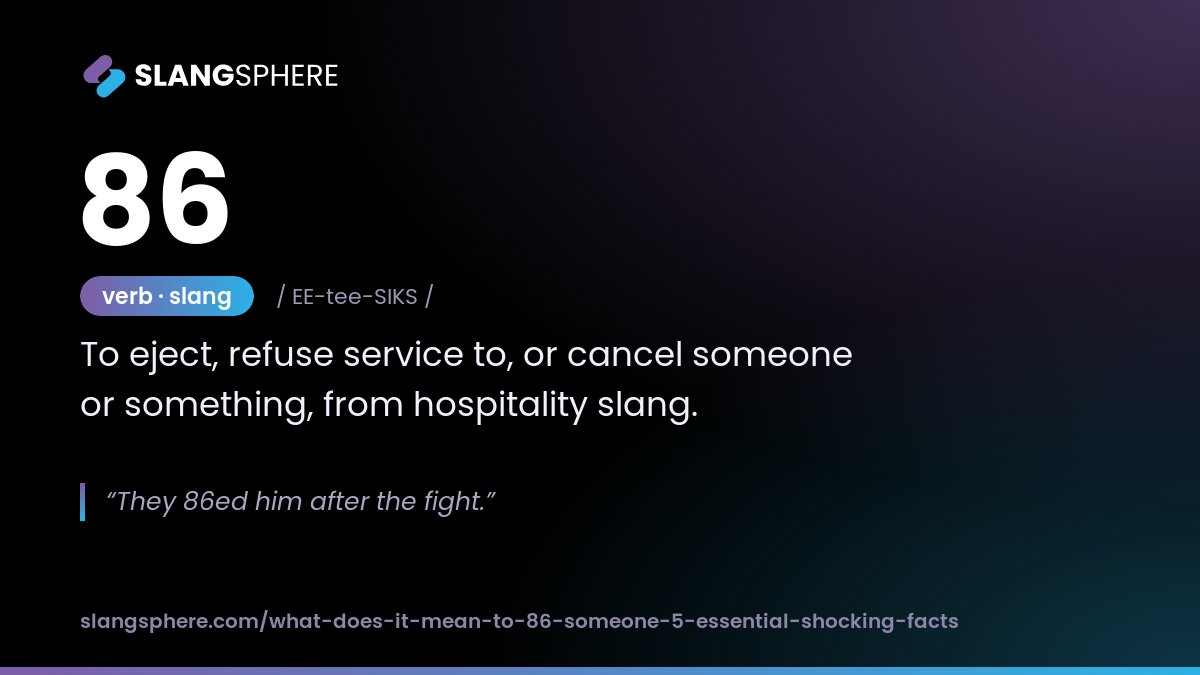
86, or eighty-six, means to eject, refuse service to, or discard someone or something, originally hospitality shorthand for an item being out. The verb and noun senses come from U.S. soda‑fountain and diner jargon and later broadened to cancel plans, nix items, or bar a person.
What it means
Main meaning: to eject or refuse service to a person, or to bar them from a place, as in a patron being “86ed” by staff. Secondary meanings: to cancel or nix an item, plan, or idea, or in kitchen/bar shorthand to mark a menu item as out of stock.
Where it comes from
The precise origin is unclear. Evidence ties the term to U.S. soda‑fountain and lunch‑counter slang from the 1920s, 1930s, where “86” showed up meaning an item was sold out. Linguists and lexicographers note several competing origin stories, and none is proven; see a concise overview at Etymonline and a popular summary at History.
How people use it
- “They 86ed him from the bar after he started a fight.”, staff removed and refused further service to a disruptive patron.
- “86 the special, we ran out.”, kitchen staff telling servers an entree is no longer available.
- “Let’s 86 that idea, it’s not worth it.”, casual use meaning cancel or drop a plan or suggestion.
- “He got 86ed from the group chat.”, informal extension meaning banned or excluded from a social space.
Tone and when not to use it
Tone: blunt and workplace-practical when used in the service industry, casual and slightly brusque elsewhere. It is not profane, but it can sound harsh when applied to people. Avoid using it as a threat or to imply violence; some rare, recent uses have been interpreted as violent, but that sense is not the historical or primary meaning.
Similar terms
nix, boot, kick out, bar, cancel
FAQ
What does 86ed mean? It means someone was ejected, barred, or refused service. In restaurants or bars it is the usual way to say a patron was sent out.
Is 86 rude or violent? It is blunt and can be rude depending on tone, but historically it does not mean to injure. A few modern contexts have used it to imply elimination or “get rid of,” yet major usage remains nonviolent and industry-focused.
Where did 86 come from? Its origin is unknown. The best evidence places it in 1930s U.S. hospitality slang, where it originally signaled an item was out; several origin stories exist but none is confirmed.
What does 86 mean on social media? People use it the same way online: to say someone or something should be dropped, excluded, or cancelled, or that a plan is scrapped.
Related Slang
- bar
- nix