


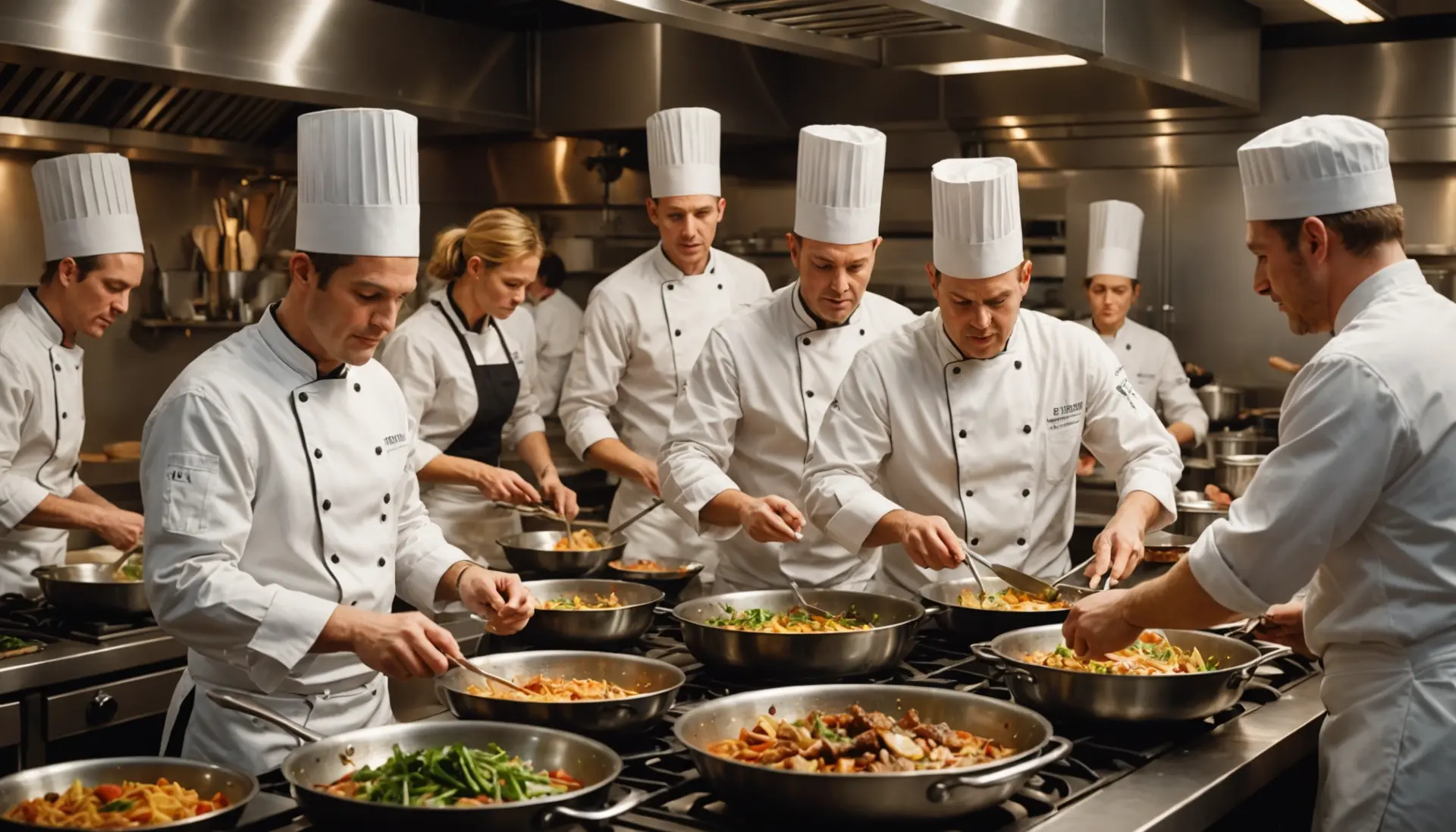

what is a kitchen slang, and no, it is not just the words chefs shout when service gets wild. Honestly, “kitchen slang” is its own little dialect, full of shorthand, attitude, and history. If you eat at restaurants or watch cooking shows, you have probably heard bits of it and not even realized you were learning a new language.
Table of Contents
What is a kitchen slang: Definition and Where It Comes From
So, what is a kitchen slang exactly? At its simplest, kitchen slang refers to the specialized vocabulary used inside restaurants and professional kitchens. It grew out of fast-paced service, immigrant communities, and the need for quick, reliable communication when timing means money and a table waits.
Think back to old-school diner scenes in movies or the chaotic line on a reality cooking show. The language there is pragmatic and snappy. Phrases like “86 it” or “behind” are short, but they carry the weight of experience and years of kitchen culture.
If you want historical background, start with the history of restaurants and culinary schools, which shaped the rhythm and structure of professional kitchens. For general context about kitchens as a space and institution, see Wikipedia. For dictionary-level definitions of “kitchen” as a word, Merriam-Webster is always handy: Merriam-Webster.
What is a kitchen slang: How People Use It Today
In practice, kitchen slang does heavy lifting. It speeds things up. It keeps orders straight. It also builds identity. Line cooks, sous chefs, pastry teams, dishwashers, hosts, expeditors, everyone picks up the rhythm and the vocabulary.
On social media, some kitchen terms leak into mainstream slang. You see TikTok videos of cooks explaining “on the fly” or social posts celebrating an “86” victory. Those moments make the language feel cool and slightly dangerous, ngl.
For meme culture or an offbeat take on food and internet trends, sites like Know Your Meme catalog how kitchen moments become viral. But within restaurants, kitchen slang still functions like a practical tool, not a meme.
Classic Kitchen Slang Terms You Should Know
If you’re curious about what is a kitchen slang in terms of real phrases, here are the classics that keep coming up across restaurants everywhere. I promise these are actually used in 2020s kitchens, not just on TV.
- 86 — Remove it. Out of the dish, gone from the line. Also used when an ingredient runs out or an order gets canceled.
- In the weeds — Overwhelmed. Too many tickets, not enough hands. A phrase every new cook fears.
- On the fly — Make it fast, usually for a customer who needs something quicker than the normal course.
- Behind — A safety call. You say it when you’re walking behind someone with hot pans or sharp knives.
- All day — How many of a specific dish are needed in total. If three tickets each call for one steak, someone might call “three steaks all day.”
Those small phrases carry big meaning. They reduce ambiguity. And they come with tone. A calm “86” is informative. A yelling “86” means chaos.
Real Conversation Examples
Here are real-style examples of how people use this language, because seeing a phrase in action is the quickest way to learn it.
Line cook: “Two salmon, one chicken, all day.”
Expeditor: “Got you. Salmon’s one on the window.”
Cook: “Behind!”
Dishwasher: “I need three pans on the fly at the pass.”
Server: “Table six wants the burger, but could you do no cheese?”
Chef: “86 the cheese on that one.”
Line cook: “Copy. Burger, no cheese, one out.”
Those exchanges look messy if you read them slowly, but in real service they are precise and quick. People repeat them until they become muscle memory. Weird, but efficient.
Why It Matters: Culture, Respect, and Burnout
Understanding what is a kitchen slang is not just trivia. It helps you read a workplace’s culture. Short, sharp language can signal professionalism and cohesion. But it can also hide exclusion, stress, and hierarchy.
There is a human cost to that speed. When people say “in the weeds,” they often mean they are drowning. Slang can be a badge of honor for veterans and a barrier for newcomers. Respectful kitchens teach the language while making room for questions.
If you want to learn more about how kitchens function and why that vocabulary developed, look into culinary training programs and oral histories of restaurant workers. Those sources give context beyond the phrases themselves.
Quick Tips for Guests or New Hires
If you are a customer overhearing kitchen slang, know this: it is normal. If you are new to the line, ask questions. Say “repeat please” when you need clarity. People who have worked in kitchens tend to respect someone who tries to learn without acting entitled.
And if you are curious about the larger history of restaurant work and its jargon, Wikipedia and Merriam-Webster are good starting points, but real stories come from people who work service shifts seven nights a week.
Wrapping Up
So, what is a kitchen slang? It is a living shorthand born from speed, necessity, and culture. It moves food from the pass to the table. It protects hands and recipes. It holds pride and sometimes pain.
Next time you hear someone yell “All day!” at a restaurant, you will know it is not random noise. It is language, compressed and purposeful. And if you want to sound less like a tourist in a kitchen, try using the classics thoughtfully and with respect.
Want to read more about related slang? Check these links on SlangSphere for terms that crossover with kitchen talk: in the weeds, 86.